
In 2026, South Korea’s judicial system is undergoing significant changes. Beyond mere procedural improvements, this year sees the widespread introduction or expanded implementation of new systems that directly impact the lives of individual citizens. Efforts to enhance judicial accessibility and protect the socially vulnerable are particularly noteworthy. It will be a crucial turning point for strengthening the transparency of trial processes, providing practical assistance to those facing economic hardship, and upholding justice in family relationships. Let’s now take a detailed look at five key judicial system changes for 2026.
Convenient Access to Trial Records through Online Pre-booking

Until now, accessing or copying trial records often involved the inconvenience of multiple court visits or long waiting times. Especially for cases requiring the judge’s permission or those currently under review by the presiding court, same-day access or copying was impossible, leading to many wasted trips. However, starting in February 2026, these inconveniences will be significantly alleviated. This is because a pre-booking system for accessing and copying trial records will be fully implemented in all courts nationwide.
Now, you can make a reservation in advance by submitting an application via email before visiting the court. Once the application is received, the person in charge will notify the applicant of available times, and on the designated date, you can visit to handle the access and copying tasks. This will significantly reduce unnecessary waiting times and wasted trips, improving work efficiency for both lawyers and parties involved. It is expected that public judicial accessibility will be further enhanced.
- What’s Changing: Full implementation of a pre-booking system for accessing and copying trial records in all courts nationwide.
- How to Apply: Submit an application via email, then book and visit on the designated date.
- Expected Effects: Reduced waiting times and wasted trips, improved judicial accessibility and work efficiency.
Introduction of ‘Living Expense Accounts’ Free from Seizure and Increased Limits

A living expense account system, designed to protect debtors’ basic livelihoods, will be newly introduced starting in February 2026. Previously, if an account was seized, many individuals faced severe economic hardship, unable to even withdraw money for living expenses. Following the amendment of the Civil Execution Act Enforcement Decree, the limit for seizure-exempt living expenses will also be raised from the current 1.85 million won to 2.5 million won.
Only one living expense account can be opened per person across all financial institutions, and only an amount within the seizure-exempt living expense limit can be deposited for one month. Deposits in this account are protected from seizure. This system is an effort by the judiciary to balance the protection of creditors’ rights with the guarantee of debtors’ minimum right to survival. Debtors will be able to use a certain amount without fear of seizure, ensuring a minimum livelihood. It is expected to play a crucial role in preventing excessive infringement on daily life and providing a stepping stone for economic recovery.
| Category | Key Changes |
|---|---|
| System Introduction | Designation of ‘Living Expense Account’ (1 account per person across all financial institutions) |
| Seizure Exemption Limit | Increased from existing 1.85 million won → 2.5 million won |
| Expected Effects | Guaranteed minimum livelihood for debtors, prevention of excessive infringement on daily life |
Implementation of ‘Goo Hara Act,’ Parents Forfeiting Inheritance Rights for Neglecting Parental Duties

The ‘Declaration of Forfeiture of Inheritance Rights’ system, also known as the Goo Hara Act, which aims to improve the unreasonable structure where parents who neglected their parental duties inherit property after their child’s death, will be fully implemented starting January 2026. This is a significant change reflecting societal demands that prioritize actual responsibility and justice over formal kinship. Inheritance rights can be restricted if the lineal ascendant of the deceased significantly violated their parental duties during the deceased’s minority, or committed serious criminal acts or severely unfair treatment against the deceased, their spouse, or lineal descendants.
The intention to forfeit inheritance rights can be expressed by the deceased through a will by notarized deed, in which case the executor of the will can petition the family court for the forfeiture of inheritance rights. Even if there is no will, co-heirs can petition the family court for forfeiture of inheritance rights within six months from the day they became aware that a person with such grounds became an heir. This will improve the unreasonable situation where parents who failed to fulfill their childcare or parental responsibilities inherit their child’s property, and new standards for inheritance disputes will be established.
- System Introduction: Implementation of the declaration of forfeiture of inheritance rights system for violating parental duties.
- Main Reasons: Significant violation of parental duties during minority, serious criminal acts, severely unfair treatment, etc.
- How to Apply: Petition by the deceased’s will or by co-heirs to the family court.
Streamlining Personal Rehabilitation Procedures and Expanding Support for Small Business Owners

The personal rehabilitation procedure for those preparing for economic recovery will also be further streamlined starting in 2026, and support for small business owners will be expanded. The previously complex document preparation and procedures were a significant burden for many. Now, personal rehabilitation application documents will be simplified, and with the applicant’s consent, the court will be able to directly link with administrative agencies to verify necessary data.
Notably, support for small business owners with annual sales of 300 million won or less is being expanded. They will be able to receive support for attorney fees, service fees, and trustee appointment fees in personal bankruptcy and personal rehabilitation cases. This aims to help small business owners recover more easily with the help of legal professionals during economic crises. These changes will increase accessibility to personal insolvency procedures and significantly reduce the actual financial burden, greatly contributing to promoting economic recovery. It is an important measure to strengthen the social safety net.
- Procedure Streamlining: Simplified personal rehabilitation application documents, direct verification of administrative agency data by the court.
- Support for Small Business Owners: Small business owners with annual sales of 300 million won or less, support for attorney fees, service fees, and trustee appointment fees.
- Expected Effects: Improved accessibility to personal insolvency procedures, promotion of economic recovery.
Promotion of Three Judicial Reform Laws, Including Increase in Supreme Court Justices
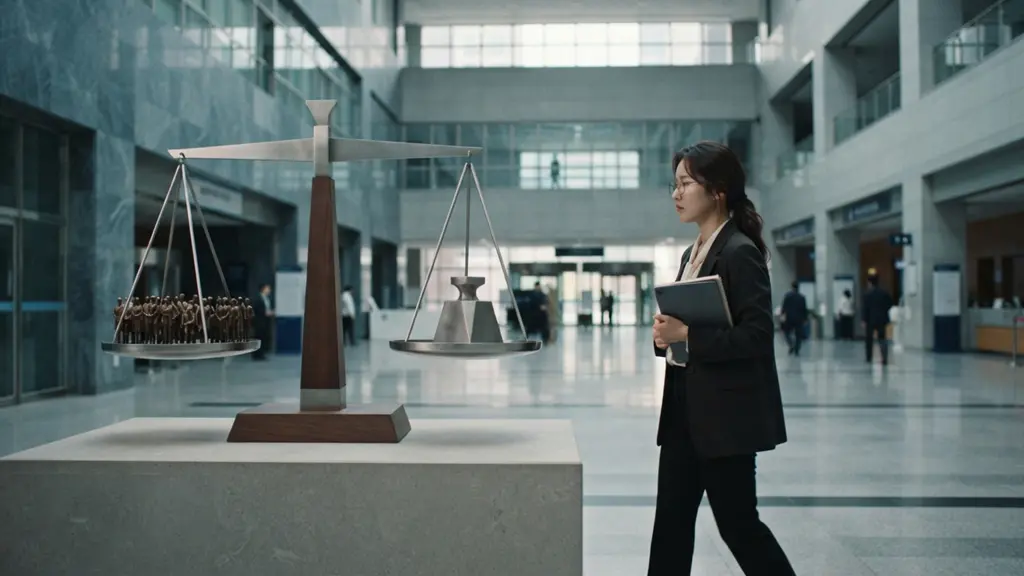
In late February 2026, the National Assembly passed amendments to the three judicial reform laws (Constitutional Court Act, Criminal Act, and Courts Organization Act), bringing fundamental changes to South Korea’s judicial system. Notably, the amendment to the Courts Organization Act announced a significant change, increasing the number of Supreme Court justices from the current 14 to a total of 26. This expansion will be phased in, with four justices added annually for three years, starting two years after the law’s promulgation.
The increase in the number of Supreme Court justices is expected to enable more in-depth deliberation of appellate cases and diversify the composition of the Supreme Court in terms of its stance on social issues and expertise in specific fields. While this presents challenges from a business management perspective, such as the ‘normalization of judicial risk’ and ‘increased uncertainty in dispute resolution,’ for citizens, it means an expanded opportunity to receive more careful and specialized trials. Furthermore, the introduction of new offenses like ‘distortion of law’ will bring changes to the investigation and trial environment, serving as an opportunity to strengthen the overall transparency and accountability of the judicial system.
| Amended Law | Key Contents |
|---|---|
| Courts Organization Act | Number of Supreme Court Justices: Current 14 → Gradually increased to a maximum of 26 |
| Constitutional Court Act | Introduction of Constitutional Complaint (planned) |
| Criminal Act | Establishment of ‘distortion of law’ offense |
2026 will be a significant year for the further development and evolution of the judicial system, which is closely linked to the lives of citizens. By understanding and utilizing these changes well, the barrier to accessing courts will be lowered, and our rights can be protected more effectively. If you have any questions, it is important to always contact the relevant institutions to confirm accurate information.