TV is no longer just a device for watching broadcasts. As of 2026, smart TVs serve as an entertainment hub and the center of the smart home. In the past, smart features were only found in expensive premium products, but now they are common in mid-to-low-priced models, broadening the range of choices but often making it difficult to decide which product to choose. Especially in 2026, the market is growing rapidly, with projections that more than half of households worldwide will own a smart TV. Simply buying based on price or size is likely to lead to regret. We will clearly outline the key points for choosing the perfect smart TV for you amidst complex specifications and various functions.
Display Technology: OLED vs QLED vs Mini LED
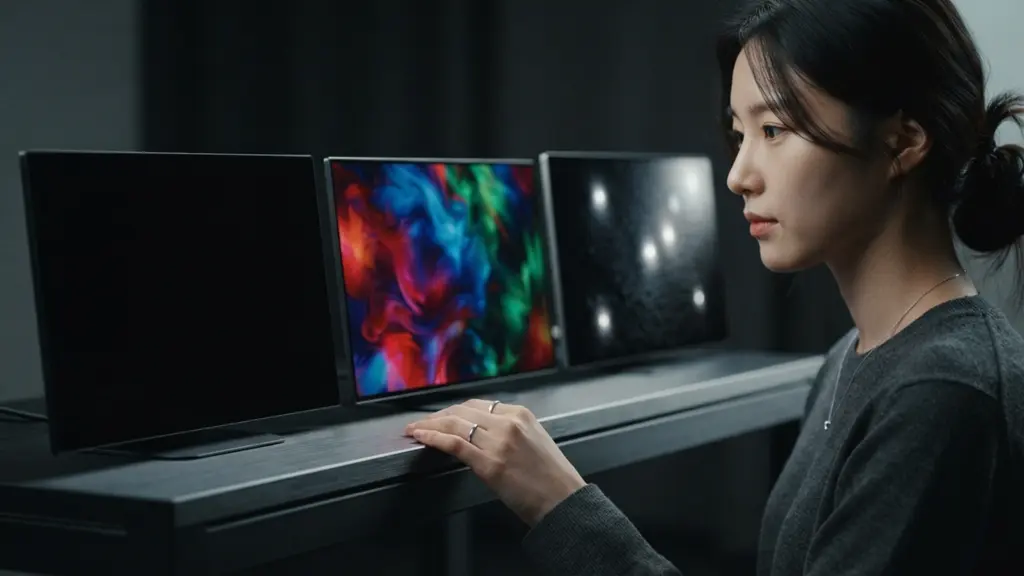
When purchasing a smart TV, the first factor to consider is display technology. The main technologies currently dominating the market are OLED, QLED, and Mini LED. Each technology has its own advantages and disadvantages, so the appropriate choice varies depending on your viewing environment and budget. OLED uses self-emitting pixels to boast perfect blacks and near-infinite contrast, along with wide viewing angles and fast response times. QLED, on the other hand, utilizes quantum dot technology to maximize color reproduction and brightness, providing a vibrant and clear picture. Mini LED is a technology that improves contrast and brightness by arranging much smaller mini LEDs more densely than traditional LED backlights, segmenting local dimming zones. Since these technologies achieve optimal picture quality in different ways, your choice may vary depending on what content you primarily watch and the environment in which you use your TV. For example, if you frequently watch movies in a dark environment, OLED is advantageous, while if you primarily watch sports or news in a bright living room, QLED or Mini LED might be a better choice.
| Technology | Advantages | Disadvantages | Key Features |
|---|---|---|---|
| OLED | Perfect blacks, infinite contrast, wide viewing angles, fast response time | Relatively high price, potential for burn-in | Self-emitting pixels, optimized for movie viewing |
| QLED | High brightness, excellent color reproduction, long lifespan | Contrast limitations compared to OLED, limited viewing angles | Quantum dot technology, clear picture quality in bright environments |
| Mini LED | High contrast and brightness, precise backlight control | Limitations in achieving perfect blacks compared to OLED | Small LED array, complements QLED’s shortcomings |
Resolution and Refresh Rate: 4K and 8K, and Gaming

TV resolution and refresh rate are important specifications that directly impact the viewing experience. The current market trend is 4K UHD resolution, and 8K UHD TVs are also gradually expanding. 4K offers four times more pixels than Full HD, creating much sharper and more detailed images. In the 2026 smart TV market, 4K UHD resolution products still account for a large proportion, and over 60% of consumers consider display quality an important factor. 8K has four times more pixels than 4K, but since there isn’t much 8K content available yet, 4K can provide a sufficiently satisfying experience in typical viewing environments. However, if you want to future-proof or desire extremely sharp picture quality, 8K is worth considering. The refresh rate indicates how many times the screen refreshes per second, with 60Hz and 120Hz being common. If you enjoy sports, action movies, and especially gaming, a TV supporting a refresh rate of 120Hz or higher is essential. A high refresh rate reduces motion blur and displays smoother movements, enhancing immersion. Additionally, HDMI 2.1 port support is crucial. HDMI 2.1 fully supports a 120Hz refresh rate at 4K resolution and provides gaming-specific features such as Variable Refresh Rate (VRR) and Auto Low Latency Mode (ALLM), making it an essential element for next-generation game console users.
Smart Features and Operating Systems: Which is Right for You?
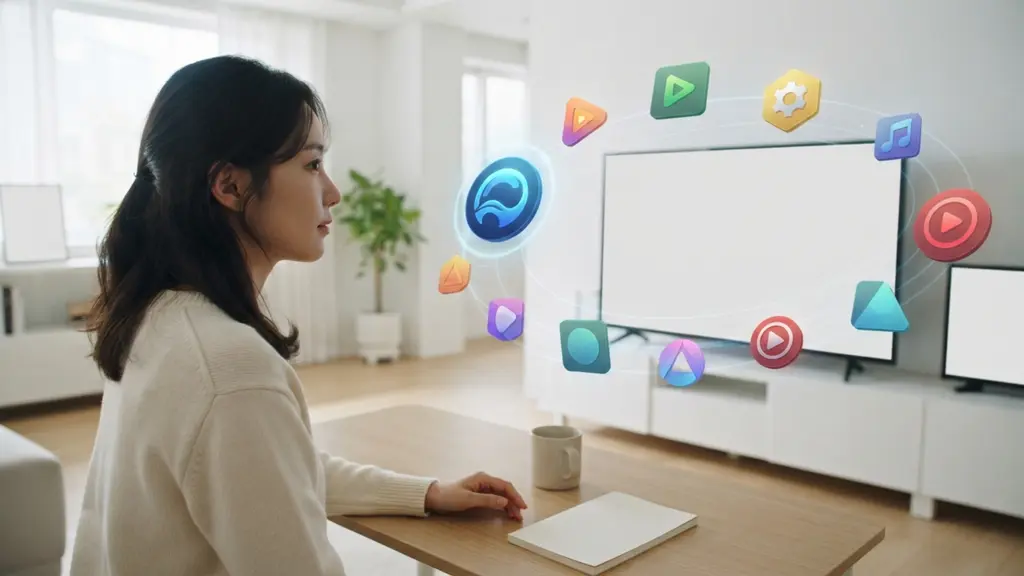
The core of a smart TV is the ability to enjoy various content and services through an internet connection. In 2026, Samsung’s Tizen, LG’s webOS, and Google’s Android TV (Google TV) are competing as major operating systems (OS). These OSes offer different user interfaces (UI) and app ecosystems. Samsung and LG provide intuitive and user-friendly UIs through their proprietary OS, supporting various functions such as OTT service apps, web browsing, and smart home device integration. Google Android TV allows access to a vast array of apps via the Google Play Store and offers excellent integration with Google Assistant. Voice recognition is now a standard feature on almost all smart TVs, allowing convenient voice control for changing channels, searching for content, and controlling smart devices. Smart home connectivity is also an important consideration. If you already use devices like smart lights or smart speakers, it’s good to check how seamlessly the TV integrates with them. For example, the ability to control other smart devices in your home via the TV, or control the TV with your smartphone, significantly enhances daily convenience. In 2026, AI integration and smart home connectivity influence purchasing decisions, with over 60% of consumers considering connectivity features as important.
Connectivity and Convenience Features: Points Not to Miss
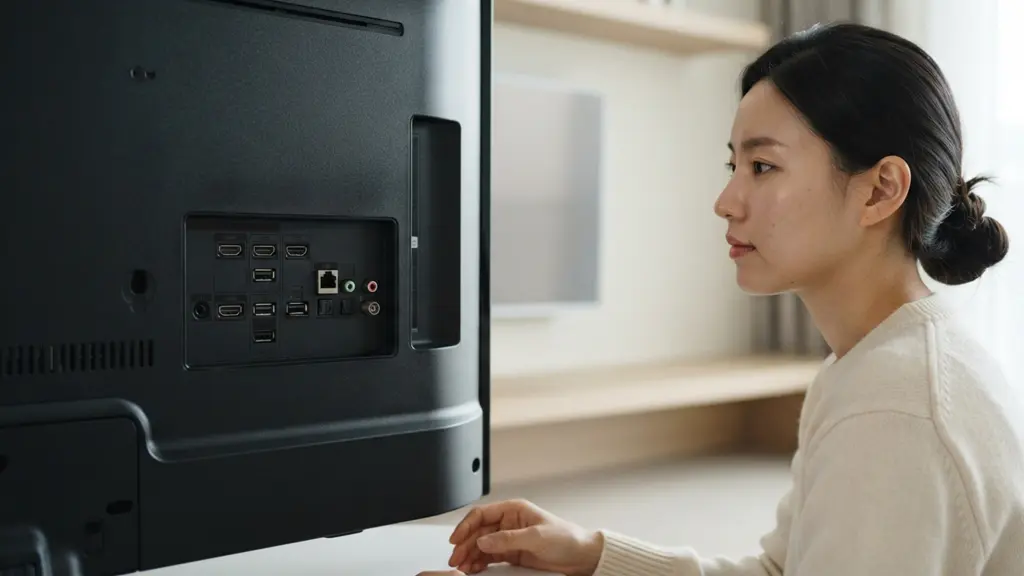
The utility of a smart TV is maximized through its connection with various external devices. Therefore, it’s important to check for a sufficient number of HDMI ports and USB ports, as well as support for the latest standards. As mentioned earlier, HDMI 2.1 ports are essential if you use next-generation game consoles or high-definition media players. The stability and speed of wireless connectivity are also important. Wi-Fi 6 support provides a seamless viewing experience when streaming high-volume 4K and 8K content, and Bluetooth functionality is useful for connecting wireless earphones or soundbars. In terms of sound, it’s advisable to check for support for advanced surround sound systems like Dolby Atmos or DTS:X. These technologies deliver a more three-dimensional and immersive audio experience. New 2026 Samsung TV products also feature ‘Sound Elevation’ technology, which repositions audio output so that dialogue sounds as if it’s coming from the center of the TV rather than a bottom soundbar, and ‘Auto Volume’ function, which automatically reduces volume differences between content to provide consistent volume. In addition, convenience features such as screen mirroring, smartphone integration apps, and Multi View function have high utility depending on the user’s lifestyle, so it is recommended to examine them carefully before purchasing.
In 2026, smart TVs have become central to our lives, moving beyond being mere viewing devices. An expensive product is not always the best choice; it’s important to make the most rational decision considering your viewing habits, usage environment, and budget. We hope you make a wise TV purchase based on the guidelines presented today. Comparing various technologies and features, and experiencing them firsthand to find the ‘perfect’ smart TV for you, will ultimately lead to a satisfying result. Enjoy a richer home entertainment life with a choice you won’t regret.