The landscape of travel is rapidly changing. Beyond simple relaxation or exploring historical sites, tech tourism, which involves directly experiencing advanced technology, is emerging as a new trend. Los Angeles (LA), especially as a hub of innovation and entertainment, is positioning itself as a leader in tech tourism, offering future-oriented travel experiences from the world’s first AI art museum to autonomous vehicles and robot wellness.
LA is transforming into a massive future experience zone, anticipating Super Bowl LXI in 2027 and the Olympic and Paralympic Games in 2028. From biometric immigration screening at the airport to autonomous robots navigating the city, advanced technology permeates every aspect of the travel journey, offering visitors an unprecedented immersive experience. This transformation goes beyond mere sightseeing, providing an opportunity to glimpse how future technology will integrate into our daily lives, capturing the attention of travelers worldwide.
LA Emerges as a Hub for Future Travel
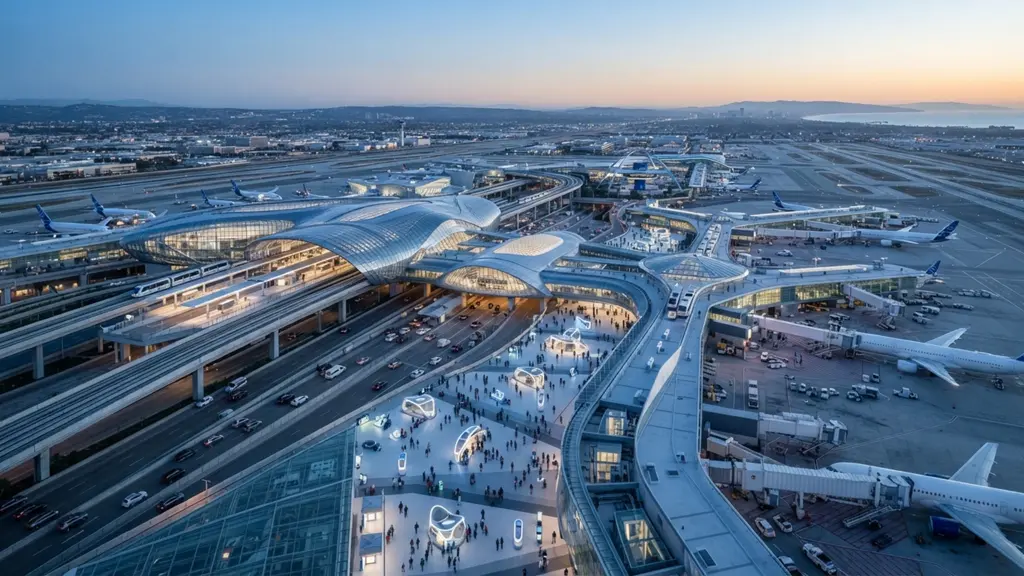
Los Angeles is rapidly evolving beyond a mere tourist city into a hub for future-oriented travel, where innovative technology and culture converge. Particularly, in anticipation of the 2028 Olympic and Paralympic Games, the adoption of advanced technology is accelerating across the city’s infrastructure, starting from the airport. Los Angeles International Airport (LAX) is streamlining immigration procedures by introducing biometric identification, automated check-in, and mobile passport control systems. The automated driverless electric train ‘Skylink’ is also set to maximize airport transit convenience by connecting terminals, rental car centers, and the Metro.
These changes leave visitors to LA with a special impression, as if experiencing a future city from the moment of arrival. With AI delivery robots and autonomous vehicles becoming commonplace throughout the city, the futuristic urban landscape once seen only in movies is now a reality. This demonstrates that LA is more than just a tourist attraction; it is a showcase of technological innovation and a living laboratory where future lifestyles can be experienced firsthand.
Innovation in Visual Arts: AI Art Museums and Immersive Exhibitions
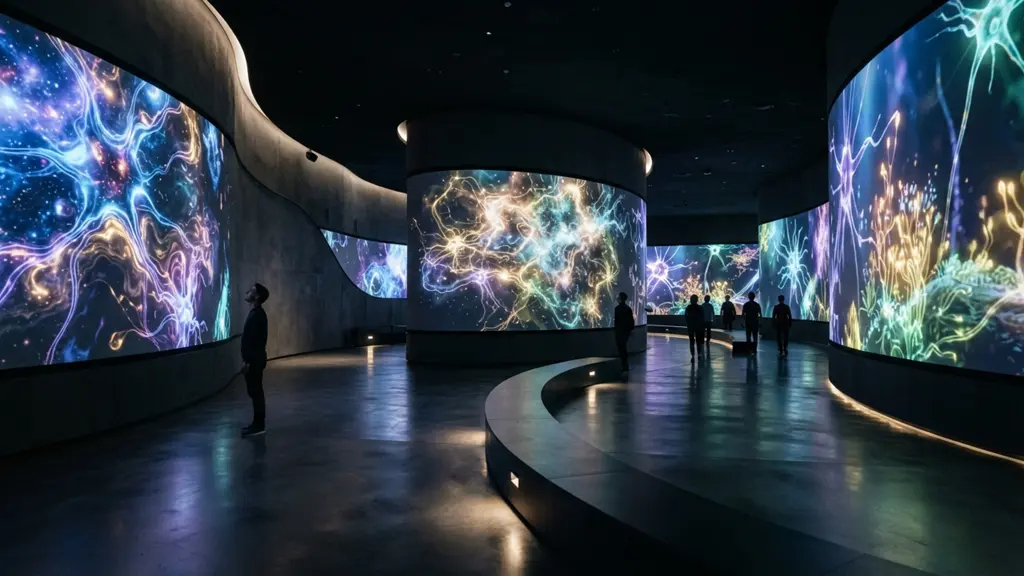
One of the pinnacles of tech tourism showcased by LA is ‘DATALAND,’ the world’s first AI art museum. Located in Downtown LA, DATALAND is a unique museum designed to exhibit and create only AI artworks, a space where human imagination meets machine creativity. Through its approximately 2,323 square meter exhibition space, it presents immersive works that interact with visitors and change in real-time.
DATALAND’s inaugural exhibition, ‘Machine Dreams: Rainforest,’ features a Large Natural Model (LNM) AI, trained on over 500 million natural images and extensive ecological data, generating artworks with real-time video and sound. What’s particularly fascinating is that the artworks change according to visitors’ biometric data, measured in real-time by sensors that track heart rate, skin temperature, and perspiration levels. Even if the same person visits again, the artwork continuously transforms based on their physical state and surrounding environmental data on that day, offering a new experience every time. This demonstrates that AI is more than just a tool; it is an agent of artistic creation, enabling a new form of art experience that interacts with the audience.
Autonomous Vehicles and Smart Mobility Roaming the City
LA’s tech tourism also offers innovative experiences in transportation. Autonomous vehicles, which navigate downtown Los Angeles without a driver, can be hailed via an app, enabling safe and convenient travel using AI, sensors, and real-time mapping technology. Waymo has already commercialized its fully autonomous driving service in several US cities, including Phoenix, San Francisco, and Austin, and is expanding its service area in LA, leading the way in future mobility.
Furthermore, Volkswagen and Uber are set to officially introduce a shared robotaxi service in LA starting in 2026, utilizing the autonomous electric minivan ‘ID. Buzz AD’. This model, where multiple passengers share a single vehicle, is expected to enhance cost-efficiency and help reduce urban traffic congestion. Such autonomous mobility transforms LA’s streets into spaces where future technology comes alive, offering travelers a new level of convenience and excitement beyond mere transportation.
From Robot Wellness to Smart Stadiums: Expanding Tech Experiences
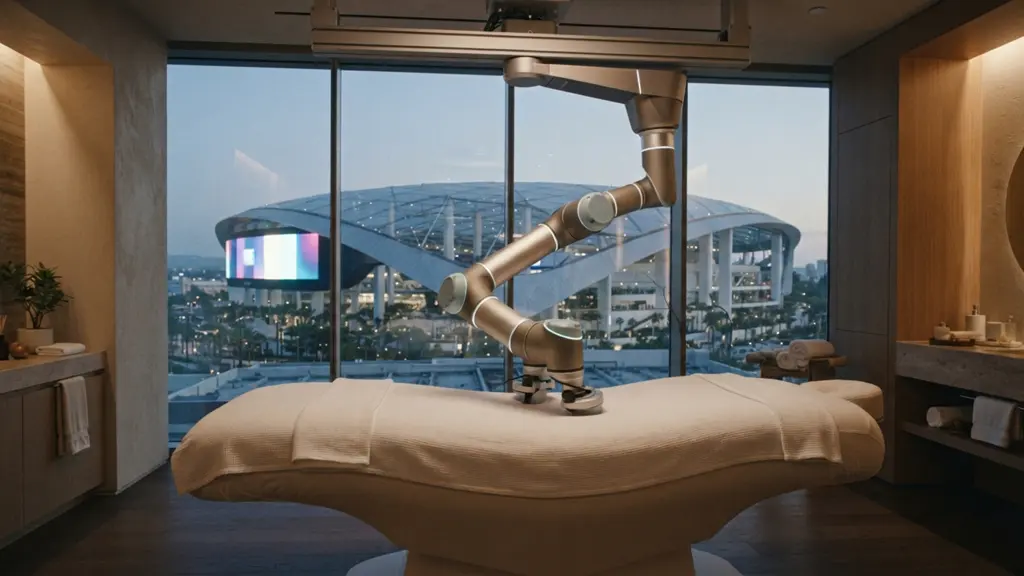
LA’s tech tourism is expanding beyond art and mobility into various other fields. Robot wellness is gaining attention for providing personalized health management and enhancement services using AI technology. For example, the W Hollywood Hotel offers AI soundscapes that change in real-time according to guests’ preferences and mood, and operates an AI robot massage system that analyzes body structure and muscle tension for customized care. This offers a new experience for travelers to recover from long flights or travel fatigue with the help of AI.
Also, SoFi Stadium, the venue for the 2028 Olympics, is one of the world’s most expensive stadiums, an immersive entertainment space integrating cutting-edge technology. Its translucent roof, covering the entire stadium, can function as a display, and the massive 2.2 million-pound Infinity Screen boasts 80 million pixels, 260 speakers, and 56 5G antennas, offering visitors an overwhelming audiovisual experience. Such smart stadiums function as future-oriented cultural experience venues, combining technology and entertainment beyond mere sports viewing.
The Pros and Cons of Tech Tourism, and Future Prospects
While tech tourism opens new horizons for travel, it also presents both advantages and disadvantages. Positive aspects include the following:
- New Experiences: AI art museums, autonomous vehicles, and similar innovations offer unique and future-oriented experiences not available in traditional travel.
- Increased Convenience: Biometric systems and smart mobility make the travel process faster and more efficient.
- Economic Revitalization: The introduction of advanced technology leads to the development of new tourism products and job creation, invigorating local economies.
However, several concerns also exist:
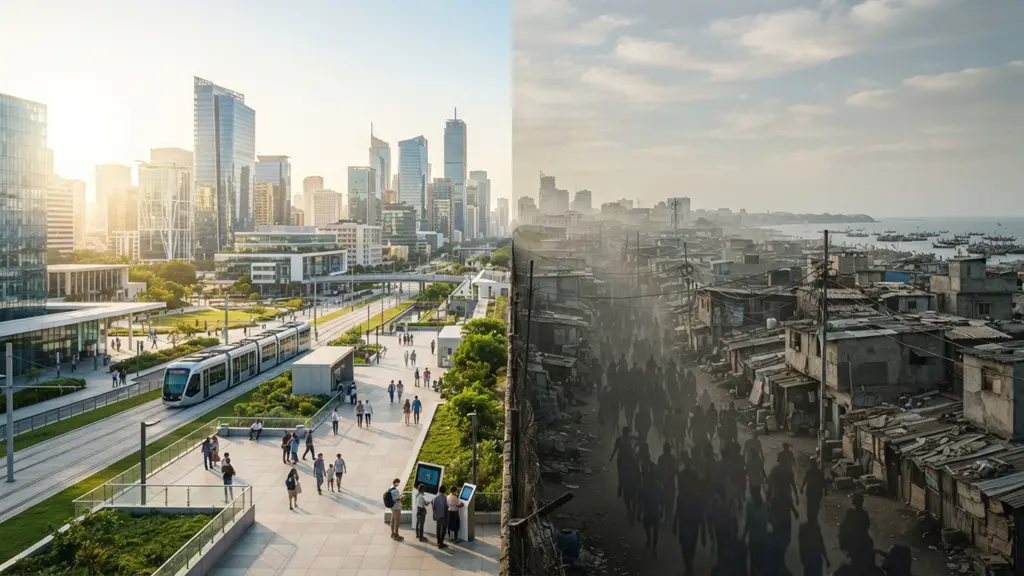
- Accessibility Issues: Advanced technology can act as a barrier for the elderly or digitally marginalized groups.
- Data Privacy: There is a risk of personal data leakage and misuse arising from the use of biometric data or during the operation of autonomous vehicles.
- Overtourism and Environmental Concerns: If technology accelerates tourist influx, it could negatively impact local communities and the environment.
Nevertheless, technological advancement will not stop, and tech tourism will continue to evolve. In the future, more personalized and immersive technology-based travel products are expected to emerge. It is crucial to implement inclusive policies to ensure that everyone can benefit from technology and to simultaneously strive for sustainable development. The current state of tech tourism demonstrated by LA presents both the possibilities of future travel and the challenges we must address.