Unpredictable extreme weather events are occurring frequently across the globe. From record-breaking heatwaves and droughts to unprecedented heavy rainfall and floods, abnormal weather seems to have become commonplace. At the heart of this climate variability lies ‘El Niño,’ a colossal natural phenomenon in the Pacific Ocean. El Niño, meaning ‘the Christ Child’ in Spanish, was named due to its tendency to appear around Christmas. This phenomenon extends beyond mere local weather changes, profoundly impacting global temperature and precipitation patterns, and directly affecting our lives and economy. How exactly does El Niño shake up the entire planet?
El Niño, a Massive Fluctuation in the Deep Pacific: Definition and Mechanism
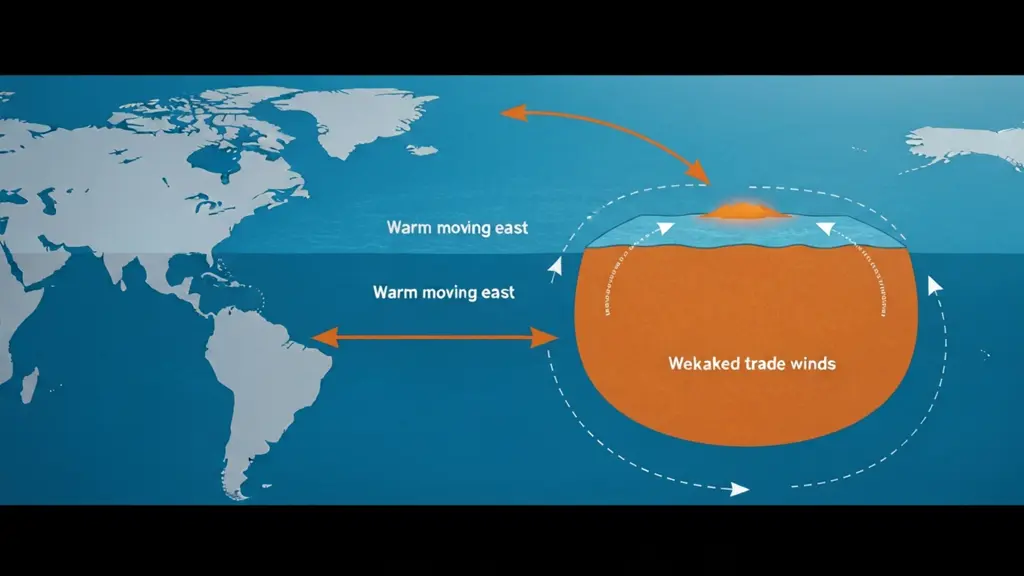
El Niño refers to a state where the sea surface temperature in the eastern equatorial Pacific remains 0.5°C or more above average for at least five consecutive months. This phenomenon occurs when the trade winds across the Pacific weaken. Normally, trade winds push warm surface water towards the western Pacific, while in the eastern Pacific, cold deep water rises to the surface through a process called upwelling. This typically results in a warm and humid climate in the western Pacific and a relatively cool and dry climate in the eastern Pacific.
However, during an El Niño event, this balance is disrupted as trade winds weaken or even reverse. Warm water shifts towards the eastern Pacific, and upwelling is suppressed, leading to an abnormal rise in sea surface temperatures in the eastern Pacific. These changes in sea surface temperature directly influence atmospheric circulation, causing disruptions in global temperature and precipitation patterns. The intensity of El Niño varies depending on the magnitude and duration of the sea surface temperature increase; stronger El Niño events have a greater impact.
2023-2024 El Niño: Recent Case and Characteristics
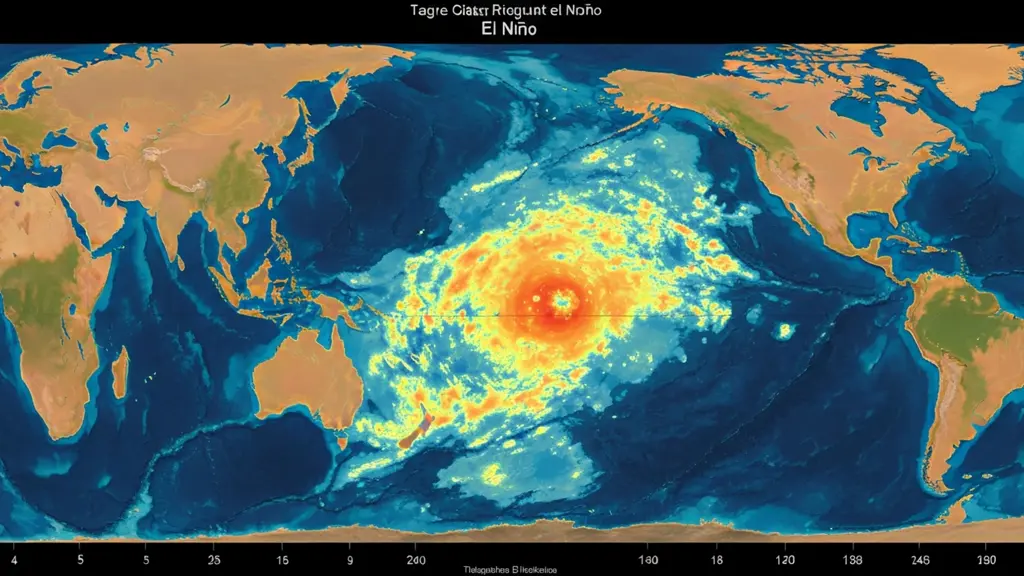
The recent El Niño that impacted the globe began in mid-2023 and exerted a powerful influence until early 2024. This El Niño was particularly noted as the strongest since 2015-2016, causing various extreme weather events worldwide. For instance, South America experienced significantly higher rainfall than average, leading to flood damage, while parts of Southeast Asia and Australia endured severe droughts and high temperatures.
Key characteristics of that El Niño included:
- Significant Sea Surface Temperature Rise: Sea surface temperatures in the eastern equatorial Pacific showed record warming, rising more than 2°C above average.
- Rapid Development Speed: It developed into a strong El Niño within a relatively short period, posing challenges for prediction and preparedness.
- Expanded Global Impact: Abnormal weather patterns were observed across a wide range of regions, including mild winters in North America and changes in rainfall in Africa.
This powerful El Niño also directly affected global food production and energy demand. For example, reduced crop yields due to drought led to an increase in international grain prices, and abnormally high temperatures increased cooling demand, impacting energy consumption.
Widespread Global Impacts of El Niño: Climate Change and Economic Repercussions
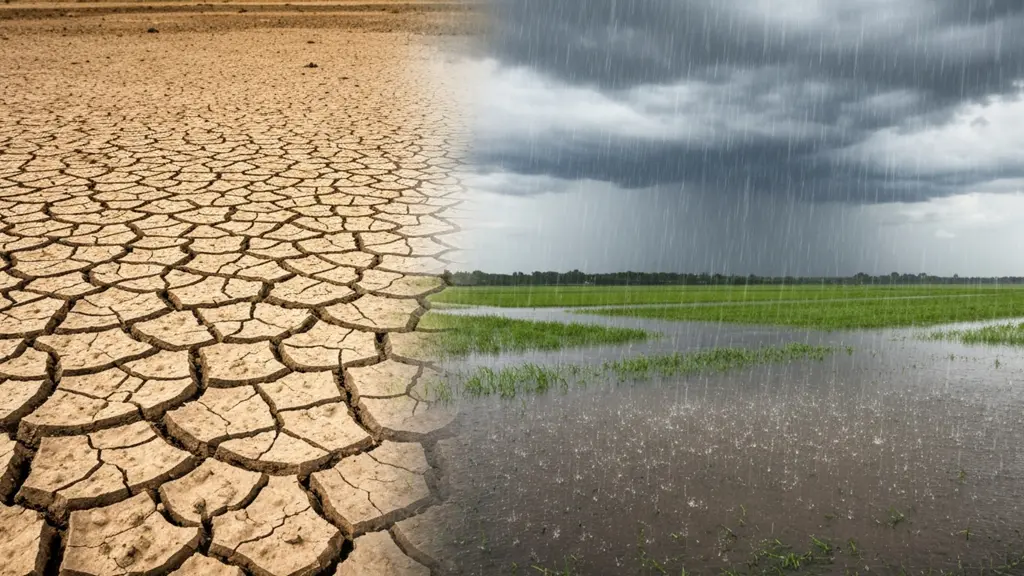
El Niño is not confined to specific regions but alters global weather patterns. Its effects extend beyond mere weather changes, creating widespread repercussions across the economy and society.
- Precipitation and Temperature Changes: El Niño can increase or decrease rainfall depending on the region and raises average temperatures. For example, countries along the eastern Pacific coast may suffer from heavy rainfall and floods, while parts of the western Pacific and Southeast Asia may experience droughts and increased wildfire risks.
- Agriculture and Food Security: Droughts and floods critically impact crop yields, leading to food price instability and threats to food security. Major crop-producing nations, particularly those of coffee, cocoa, and palm oil, can be severely affected.
- Water Scarcity and Energy Issues: Insufficient rainfall can lead to the depletion of drinking water sources and reduced hydropower generation, potentially causing water shortages and energy supply instability.
- Ecosystem Disruption and Disease Spread: Rising sea surface temperatures affect marine ecosystems, and climate change can expand the range of mosquito-borne diseases (such as malaria and dengue fever).
- Economic Losses: Infrastructure destruction due to natural disasters, reduced agricultural output, and a decline in the tourism industry can inflict substantial losses on national economies.
Thus, El Niño triggers unpredictable climate patterns, becoming a crucial consideration for each nation’s disaster preparedness systems and economic policies.
El Niño, La Niña, and Neutral: Understanding the ENSO Cycle
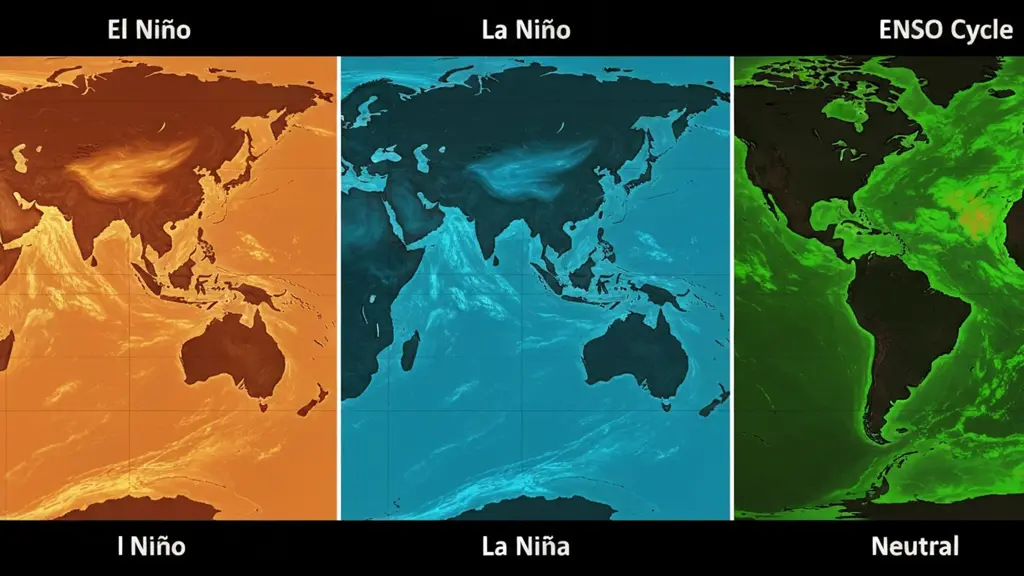
El Niño is not an isolated phenomenon but part of a larger climate cycle known as the ‘El Niño-Southern Oscillation (ENSO).’ ENSO is a natural variability characterized by changes in sea surface temperatures and atmospheric circulation in the equatorial Pacific. The ENSO cycle is broadly divided into three states:
- : A state where sea surface temperatures in the eastern equatorial Pacific are warmer than average, characterized by weakened trade winds and suppressed upwelling in the eastern Pacific.
- La Niña: The opposite of El Niño, where sea surface temperatures in the eastern equatorial Pacific are cooler than average. It is characterized by strengthened trade winds and active upwelling in the eastern Pacific. La Niña tends to cause weather patterns opposite to those of El Niño. For example, it can bring more rain to Southeast Asia and Australia, and drought to parts of South America.
- Neutral: A state where sea surface temperatures remain at average levels, showing neither El Niño nor La Niña characteristics. During this period, ENSO’s influence is relatively minor, and global climate tends to be similar to average.
The ENSO cycle typically recurs every 2 to 7 years, with the duration and intensity of each state varying. Understanding this cycle is crucial for long-term climate prediction and disaster prevention. Meteorologists analyze various data, including sea surface temperature, atmospheric pressure, and winds, to predict the current state and future outlook of ENSO.
Upcoming Climate Pattern Predictions: Outlook Beyond 2026
Following the strong El Niño that concluded in early 2024, predictions largely indicated a transition to a neutral state from mid-2024, likely moving towards La Niña. Then, 2025 and 2026 could be highly volatile periods, with neutral or weak El Niño/La Niña conditions alternating. While climate models excel at short-term predictions, accurately forecasting the long-term ENSO cycle remains a challenging task.
However, it’s crucial to understand that El Niño and La Niña do not merely signify changes in temperature and precipitation. They can combine with global warming to further amplify the frequency and intensity of extreme weather events. For instance, during an El Niño period, global average temperatures tend to rise, increasing the likelihood of record-breaking high temperatures in addition to existing warming trends. Therefore, climate patterns beyond 2026 could unfold in even more unpredictable ways due to the complex interaction between the ENSO cycle and global warming.
Continuous climate monitoring and strengthening prediction systems, as well as global efforts to address climate change, are becoming increasingly vital.
El Niño simultaneously reveals the complexity of the climate system and the challenges of prediction. Ongoing research and understanding of this immense natural phenomenon will be essential for wisely responding to future climate crises. We must prepare for the potential risks that El Niño may bring and not cease our efforts for a sustainable future. The Earth keeps turning, the climate keeps changing, and ultimately, the world we live in is always a continuous cycle of prediction and preparation.