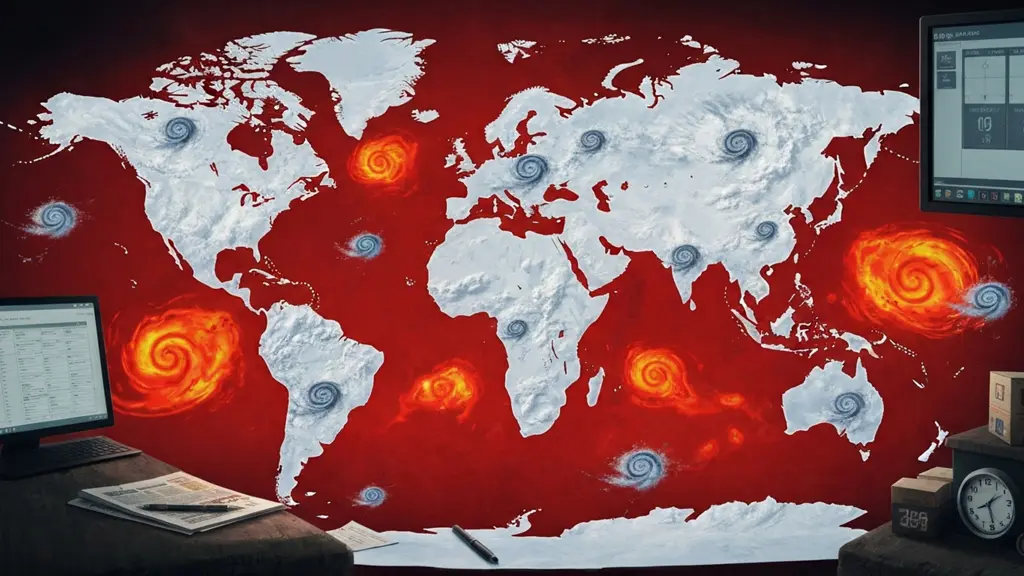
May 2026 – an unusual energy already permeates the air as summer approaches. Beyond simply getting hotter, extreme weather phenomena predicted worldwide are issuing new warnings. The prevailing outlook is that this year’s weather will be distinctly different from previous years, with changes in the El Niño-Southern Oscillation (ENSO) at its core.
What will the weather in 2026 look like? We’ll take a sober look at the potential for upcoming extreme weather events, including record-breaking , powerful typhoons, and unexpected cold snaps, through the analysis of meteorological experts worldwide.
2026: Predicted Record-Breaking High Temperatures

2026 is highly likely to be recorded as one of the hottest years in history due to the influence of El Niño. According to the latest meteorological prediction models, the global average temperature in 2026 is expected to be approximately 1.4 degrees Celsius higher than the pre-industrial average. This figure places 2026 among the four warmest years since 1850, and some analyses suggest that a continuous exceedance of 1.4 degrees Celsius is no longer merely symbolic.
- Frequent Heatwaves: Heatwaves are likely to occur more frequently and intensify in 2026.
- Rising Temperatures: Global average temperatures have been steadily increasing for over a century, and this trend will continue in 2026.
- Amplified Extreme Phenomena: Rising temperatures contribute to the amplification of extreme weather events such as longer and more dangerous heatwaves, heavy rainfall causing sudden floods, and persistent droughts.
In particular, as typhoons/tropical cyclones active in the East Sea in 2025 reached a record high of 21, the most since 1961, preparation for such extreme phenomena is also necessary in 2026.
Changes in El Niño-Southern Oscillation (ENSO) and Its Impact

A significant variable for 2026 weather is the El Niño-Southern Oscillation (ENSO) phenomenon. Currently in a weak La Niña state, ENSO is highly likely to transition to a neutral state in the first half of 2026 and then gradually shift to an El Niño phase in the second half.
- ENSO Phase Transition: From May to July 2026, ENSO will remain in a neutral state, with the probability of transitioning to an El Niño state increasing in the latter half of the year.
- Risk of Powerful Typhoons: The unstable atmospheric-oceanic conditions due to the ENSO phase transition pose a risk of very powerful typhoons in 2026.
- Impact on the Korean Peninsula: Some analyses suggest that a super El Niño could lead to more frequent heavy rainfall or heatwaves around the Korean Peninsula.
These continuous ENSO phase transitions are identified as a major cause of extreme weather and climate phenomena worldwide.
Weather Anomaly Outlook for the Korean Peninsula and Major Regions
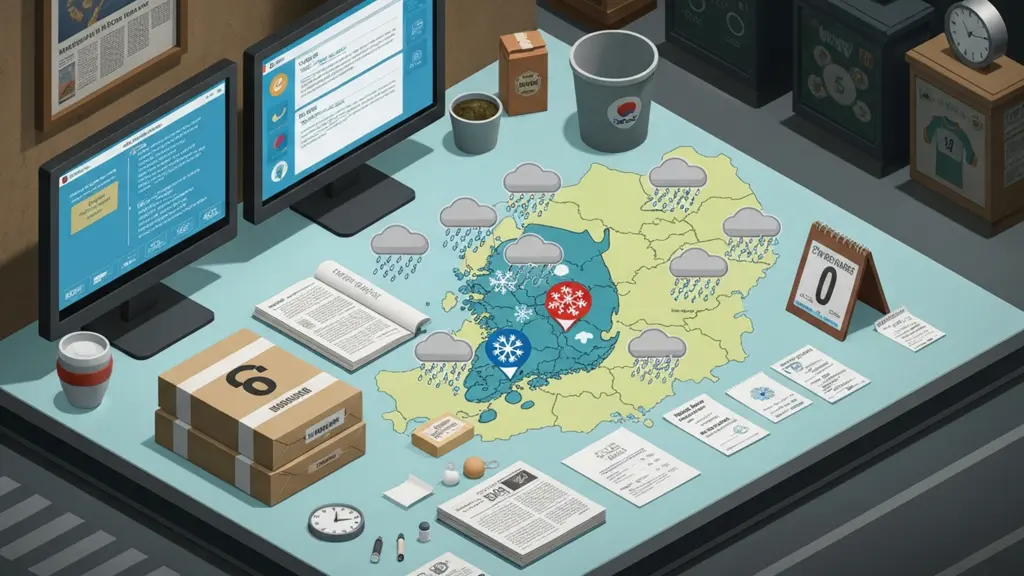
2026 is expected to see frequent unpredictable weather anomalies worldwide. Localized heavy rainfall, flash floods, and even powerful cold snaps and heavy snowfall necessitate preparation tailored to each region’s characteristics.
- US Winter Cold Snaps and Heavy Snowfall: According to the Farmer’s Almanac’s long-range winter forecast for 2025-2026, severe cold snaps and heavy snowfall are expected across the United States. Particularly pronounced cold snaps are predicted for mid-January and mid-February.
- Korean Peninsula Winter Outlook: The Korean Peninsula also faces the possibility of cold snaps and heavy snowfall in the 2025-2026 winter.
- Localized Heavy Rainfall and Floods: In certain regions of the United States, daily showers and thunderstorms during the Memorial Day holiday period in late May have already increased the risk of flash floods. Flash floods are characterized by their suddenness and speed, making them difficult to predict.
The combined effects of climate change and ENSO’s instability are making global weather more extreme and unpredictable. Continuous attention to weather forecasts and thorough preparation considering each region’s characteristics are more crucial than ever.