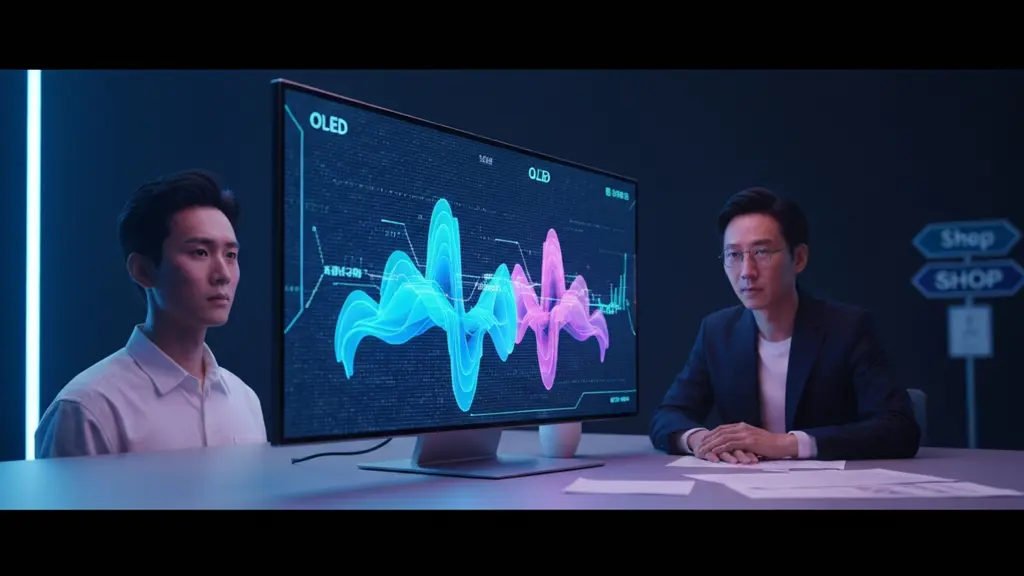
OLED technology trends OLED Technology Trends The display market is rapidly changing. In particular, Organic Light-Emitting Diode (OLED) technology is expanding beyond smartphones into various fields such as extended reality (XR) devices, vehicles, and laptops, establishing itself as a core technology for future displays. At the center of these changes is the technological prowess of companies like Sunic System, a leader in OLED evaporation equipment. We are entering an era where displays are deeply involved in every moment of our lives, going beyond simply viewing screens.
Currently, the display industry is fiercely competing to develop next-generation OLED technology that implements ultra-high resolution, low power consumption, and high brightness. Micro OLED (OLEDoS), which is expected to drive the popularization of AR·VR devices, is attracting attention as a technology that overcomes the limitations of existing glass substrates by depositing OLEDs on silicon wafers. This technology achieves ultra-high resolutions of thousands of PPI (pixels per inch) and boasts a thin, light form factor and fast response speed.
LG Display’s Bold Investment and Sunic System’s Technology
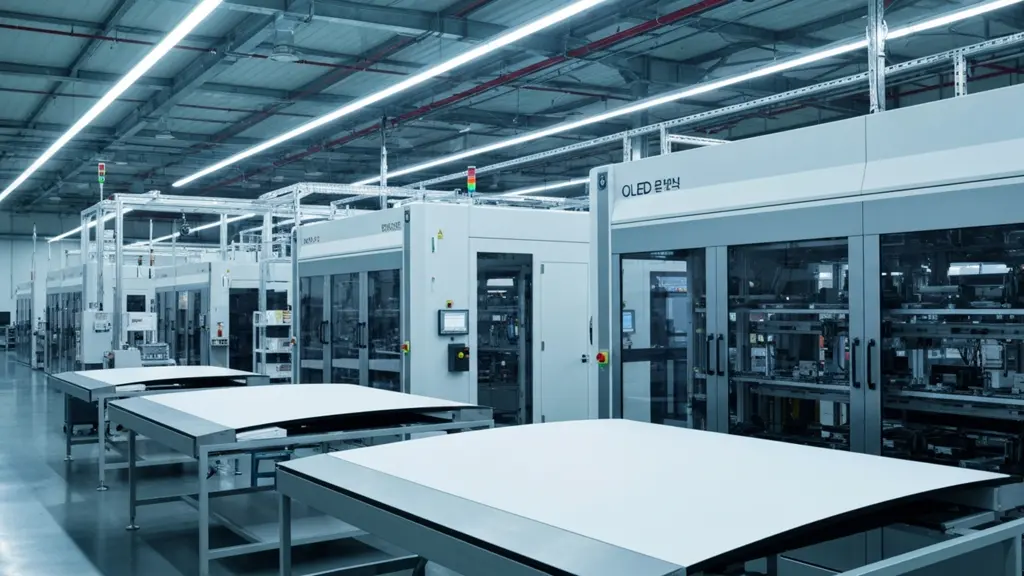
LG Display recently began full-scale investment in new OLED infrastructure worth 1 trillion won, aiming to preempt the next-generation display market. The 6th generation OLED evaporator, which garnered the most attention in this investment project, was supplied by Sunic System. This is significant because Sunic System secured the business, surpassing Japan’s Canon Tokki, which had virtually monopolized the 6th generation evaporator market, thereby strengthening its position. Although this order is for new technology development in the short term, it involves supplying equipment that will be used for mass production of mobile OLEDs in the future, demonstrating that Sunic System’s technology will play a key role in the future market.
- LG Display’s 1 trillion won new investment: Large-scale capital injection for next-generation OLED infrastructure construction
- Sunic System’s 6th generation OLED evaporator order: Selected as a key equipment supplier, surpassing Japan’s Canon Tokki
- Contribution to future mobile OLED mass production: This order lays an important foundation for future mobile OLED mass production
These movements represent a significant turning point that will change the landscape of the display industry.
Evolution of Ultra-High Resolution Micro OLED Technology

Micro OLED is emerging as a core technology that will accelerate the popularization of AR·XR devices. Various technological attempts are being made to overcome the limitations of existing displays and achieve ultra-high resolution. A research team at Korea University recently succeeded in implementing an active-matrix OLED (AMOLED) driving circuit without capacitors. This technology utilizes memristor devices to simplify the circuit and improve power efficiency, suggesting the possibility of achieving ultra-high resolution of over 5,000 PPI even on low-cost glass substrates.
- Memristor-based AMOLED circuit: Simultaneously performs driving and storage without capacitors
- Circuit simplification and power efficiency improvement: Increased energy efficiency by utilizing non-volatile resistance characteristics
- Potential for ultra-high resolution implementation: Expected to achieve over 5,000 PPI even on low-cost glass substrates
Such innovative technology development will undoubtedly accelerate the growth of the micro OLED market. You can glimpse the future of displays through the latest research achievements.
Samsung Display and LG Display’s Technology Competition

The two major domestic display giants, Samsung Display and LG Display, intensified their technology competition by unveiling a large number of next-generation OLED technologies at ‘SID Display Week 2026’. Samsung Display introduced ‘Flex Chroma Pixel’, an OLED technology for smartphones that supports a maximum brightness of 3,000 nits in high-brightness mode and over 96% of the BT.2020 color gamut. They also unveiled ‘Sensor OLED’, which can measure blood flow on the screen to check health information. LG Display revealed ‘3rd generation Tandem OLED’, which improves power efficiency by 18% and doubles lifespan, signaling its intention to target the premium market.
- Samsung Display’s ‘Flex Chroma Pixel’: Supports maximum 3,000 nits brightness, over 96% BT.2020
- Samsung Display’s ‘Sensor OLED’: Can measure blood flow and check health information on screen
- LG Display’s ‘3rd generation Tandem OLED’: 18% power saving, 2x lifespan improvement
These technological innovations show that displays are evolving from simple information delivery media into core tools that enhance our quality of life. It is a good idea to check the major trends in the current OLED market. The display industry is constantly evolving, bringing innovative changes to our daily lives. The technological prowess of domestic companies like Sunic System, and the fierce technological competition between Samsung Display and LG Display, are the driving forces behind these changes. If you are curious about future display technology, it is important to continuously look for related news.