The horrific fire accident at Daejeon Anjeon Industrial on April 7th sent shockwaves through our society. This terrible incident, which resulted in a staggering 74 casualties, has sparked public outrage as it was revealed to be not just a simple accident, but a man-made disaster caused by a lack of awareness regarding company safety. Police investigations uncovered absurd circumstances, including illegal building extensions and the deliberate disabling of fire alarms, leading to unavoidable questions about how far corporate responsibility has fallen. This accident will be recorded as a clear example of what companies are missing in their relentless pursuit of profit, and how devastating the consequences can be.
As of 2026, many companies are grappling with survival strategies amidst the massive waves of AI transformation and uncertainty management. However, the Daejeon Anjeon Industrial fire once again reminds us of the harsh reality that any innovation and growth will instantly become a fleeting mirage if the ‘basics’ crumble.
The Horrific Man-Made Disaster: The True Face of the Daejeon Anjeon Industrial Fire
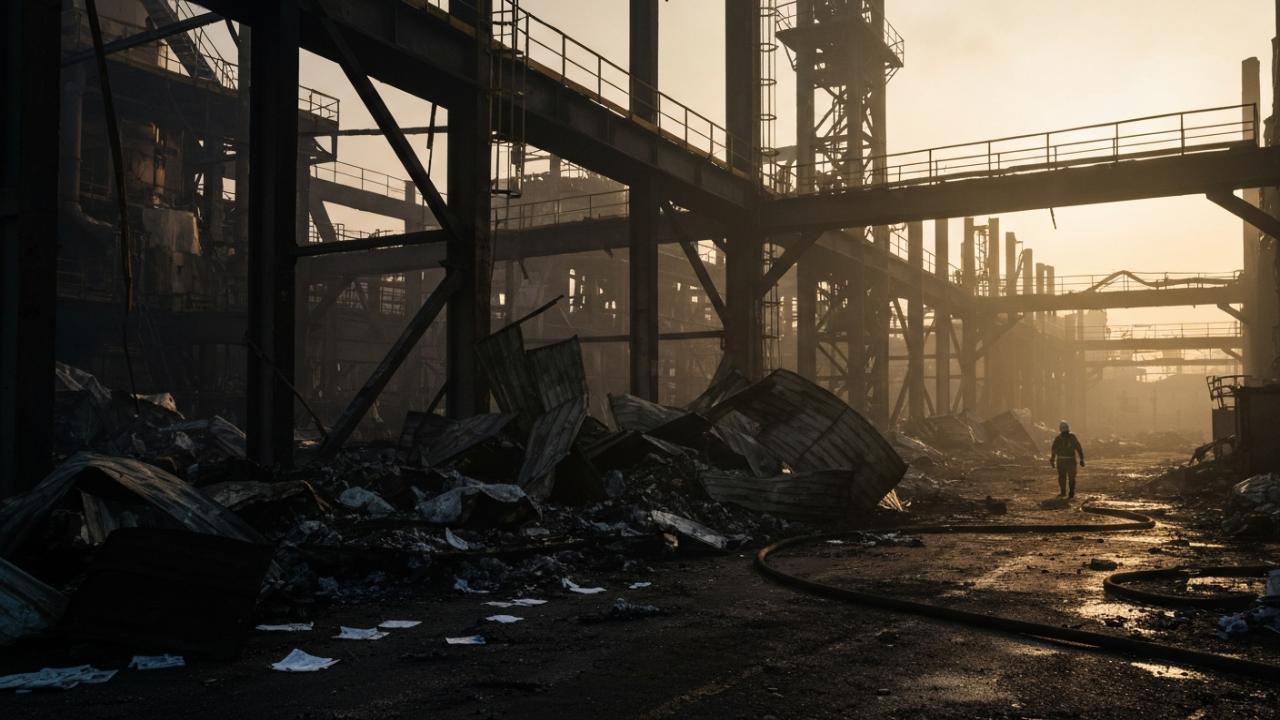
The Daejeon Anjeon Industrial fire was truly a shocking ‘man-made disaster.’ It was a major tragedy with 14 deaths and 60 injuries. The police have charged five individuals, including CEO Son Joo-hwan, with occupational negligence resulting in death and injury. The facts revealed during the investigation were even more appalling. The main cause cited for the increased casualties was illegal building extensions. Furthermore, the fact that all fire alarm notification buttons were turned off raises suspicions of intentionality beyond mere safety complacency.
- Illegal Extension: The area where most casualties occurred was an illegally extended space.
- Alarm Disablement: At the time of the fire, the alarms were deliberately turned off, and the police are investigating those involved.
- Charges Filed: Five individuals, including Anjeon Industrial CEO Son Joo-hwan and the safety manager, have been charged with occupational negligence resulting in death and injury.
The bereaved families are strongly demanding a thorough investigation and appropriate punishment, stating that they do not feel sincerity in the company’s response. This situation, frankly, makes one exclaim, ‘This is infuriating!’
Where Did ‘Human in the Loop’ Go? A Collapsed Safety Management System

One of the key keywords in the recent business environment is the ‘widespread adoption of agentic AI.’ In an era where AI autonomously plans and executes, the importance of the ‘Human in the Loop’ principle is often emphasized. This means that humans should have the final say in critical areas such as ethical judgment, risk management, and strategic decision-making. However, looking at the Daejeon Anjeon Industrial incident, it’s impossible to avoid criticism that even basic human safety management, let alone AI, was not functioning properly.
- In an age where the ‘Human in the Loop’ principle is emphasized for AI, basic human safety management was absent.
- The CEO’s responsibility for approving and instructing the illegal extension is clear.
- The act of turning off the fire alarms is difficult to see as a simple mistake and demonstrates an intentional disregard for the entire safety system.
This accident is an example of how easily responsibility can be neglected in the safety sector, where human judgment and intervention are essential. Ultimately, even the best system is useless if people don’t operate it properly.
Repeating Tragedies: What is Corporate Responsibility?
Unfortunately, industrial safety accidents are not a new phenomenon. Every time an accident occurs, ‘prevention of recurrence’ is shouted, but tragedies continue to repeat. As of 2026, many companies are advocating ‘resilience management’ amidst the normalization of uncertainty, emphasizing rapid adaptation and proactive responses. But can the term ‘resilience’ even apply to companies that lack even the most basic safety systems?
- Companies must fulfill their social responsibilities beyond profit-seeking.
- Strengthening safety regulations and thorough enforcement are necessary.
- A fundamental change in corporate culture is needed to prioritize safety as the highest value.
The Daejeon Anjeon Industrial fire tragedy once again reminds us that companies are not merely entities that make money, but entities that directly affect the lives and safety of society members. Companies must not ignore the lives of people hidden behind numbers.
The Daejeon Anjeon Industrial fire has left us with a painful lesson. The most obvious truth is that human life is more important than corporate profit. We hope that this incident will serve as an opportunity for companies to truly prioritize safety as their top management value and to create real change, not just formal slogans. Only then will such terrible tragedies never be repeated.