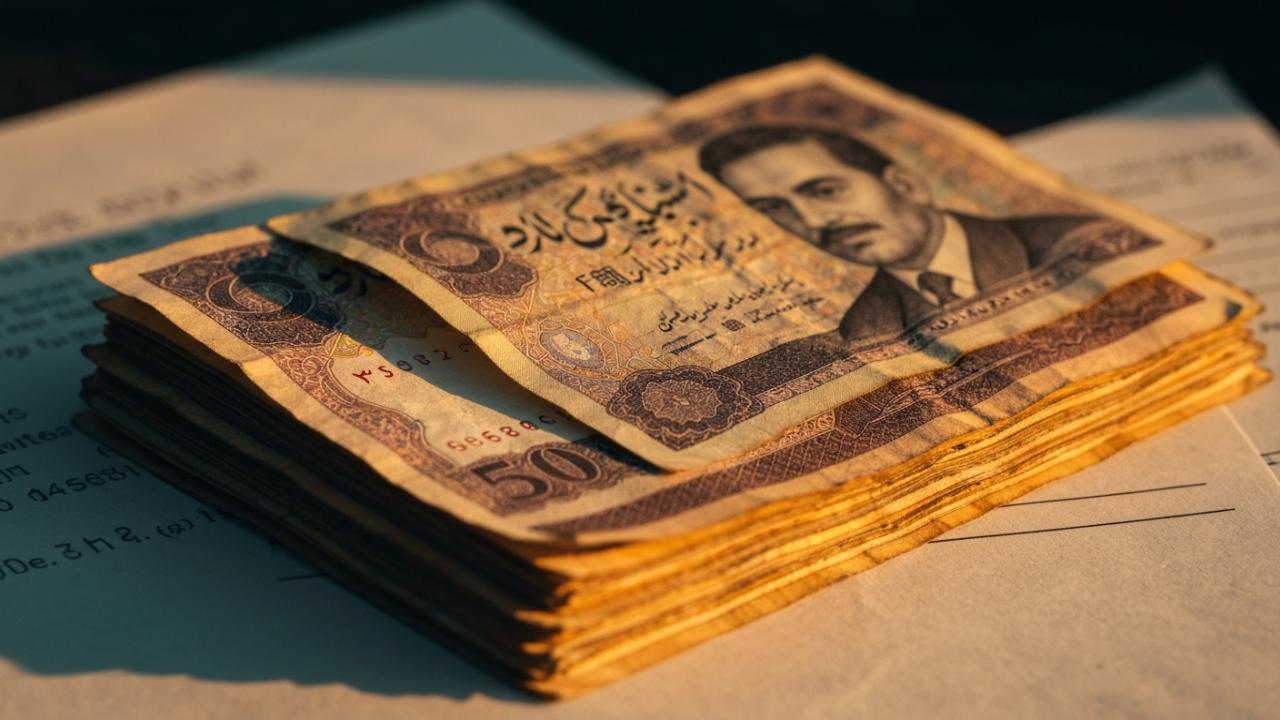
Money, which we earn and spend every day. Its existence is so self-evident that we often live without deeply considering its value. We might be happy or sad about our bank balance increasing or decreasing, but we rarely think that the power of money itself could suddenly disappear one day. However, somewhere in the world, a harsh reality unfolds where this ‘obvious’ value crumbles helplessly. As of 2026, Iran stands at the center of it.
The Iranian rial has plummeted to an all-time low, and hyperinflation is shaking the lives of its citizens to their core. A situation where money turns into mere scraps of paper in just a few days is not just a distant story. This crisis, caused by a combination of an unstable international situation and complex economic woes, clearly demonstrates how vulnerable the value of money, which we take for granted, can be.
Iranian Rial Plummets: The Moment Money Becomes Worthless
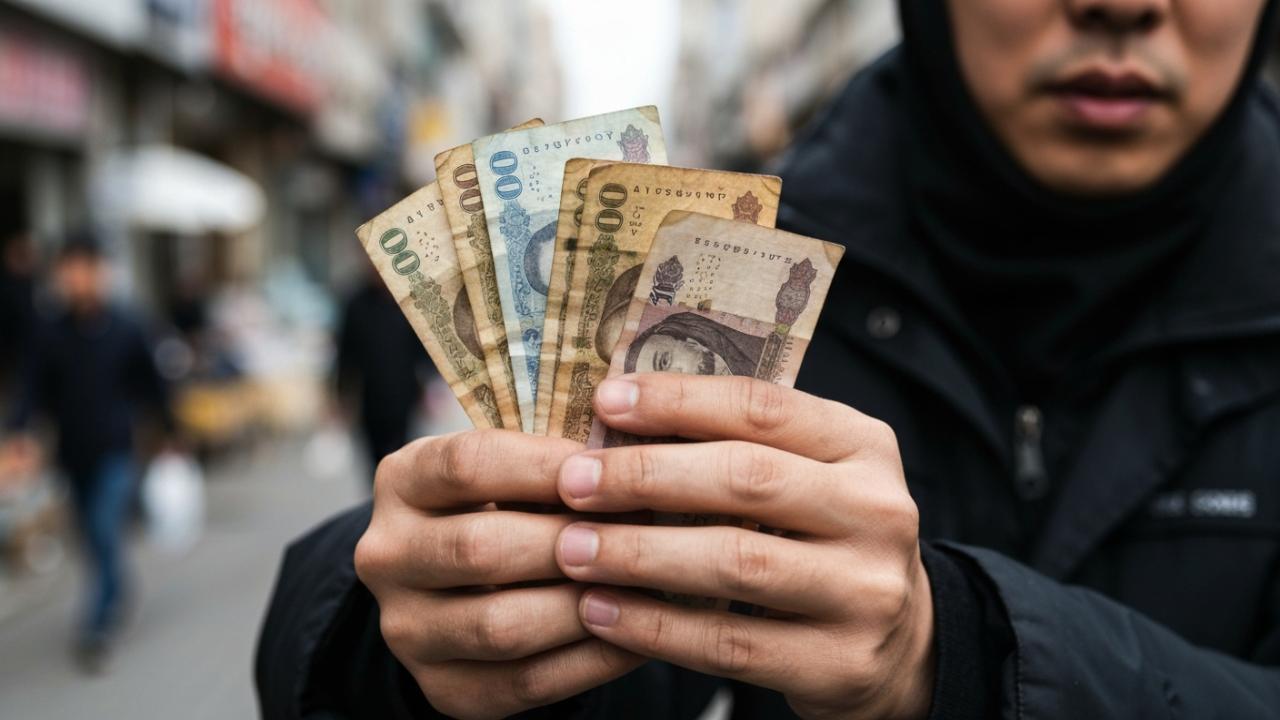
On April 29, 2026 (local time), the Iranian rial exchange rate hit an all-time low of 1.81 million rials per U.S. dollar. This was a sharp drop of over 15% in just two days. The Iranian economy was directly hit by the collapse of its currency value as demand for dollars surged due to reduced oil exports and foreign currency inflows from the prolonged blockade of the Strait of Hormuz.
The sharp drop in the exchange rate immediately led to price increases. Analysis suggests a high probability of overall price increases for food, medicine, and raw materials. The International Monetary Fund (IMF) projected Iran’s economy to contract by 6.1% this year, with inflation reaching 68.9%. This is a typical sign of hyperinflation, where the purchasing power of money disappears incredibly quickly, beyond just rising prices.
- Exchange Rate Surge: Rial value dropped over 15% in two days, reaching 1.81 million rials per dollar.
- Price Increases: Concerns about overall price increases for essential goods like food and medicine.
- Economic Contraction: IMF projects Iran’s economy to shrink by 6.1% with 68.9% inflation.
South Korea’s Economy: Growth Amidst Instability

While Iran’s situation is extreme, the South Korean economy is not entirely safe either. In 2026, South Korea’s economy is expected to see a moderate recovery of around 2% driven by consumption-led domestic demand. However, structural weaknesses such as lower growth potential than pre-pandemic levels and sensitivity to changes in external conditions persist.
In particular, the won/dollar exchange rate is likely to remain high, above 1,350 won, and its volatility is expected to increase. This could put pressure on households and businesses by increasing import prices. Furthermore, high household debt continues to restrict interest rate cuts. The rapid increase in national debt, despite the government’s expansionary fiscal policy, is also a risk factor that cannot be overlooked.
- Moderate Growth: South Korean economy projected to grow around 2% in 2026.
- High Exchange Rate: Won/dollar exchange rate expected to stabilize above 1,350 won with increased volatility.
- Household Debt Burden: Concerns about restricted interest rate cuts and rising national debt.
Unstable Financial Markets: Protecting Asset Value
Global economic uncertainty remains high. U.S. political events (such as changes in the Fed chair, Supreme Court rulings, and midterm elections) are expected to have an impact throughout 2026, but their ripple effects are difficult to predict. This macroeconomic environment directly affects various financial asset markets, including stocks and cryptocurrencies.
Indeed, in the cryptocurrency market, an unstable supply and demand structure has been observed where large investors (whales) in XRP (Ripple) are selling off their holdings to realize profits, and individual investors are buying them up. This is interpreted as a typical precursor to a bearish reversal, increasing tension about a sharp price drop. Even the price of gold, considered a safe-haven asset, is observed to fluctuate depending on the earnings announcements of big tech companies. Ultimately, this proves that a cautious approach is needed to protect asset values during unstable times.
- Global Uncertainty: Unpredictable variables like U.S. political events exist.
- Cryptocurrency Market Instability: XRP whale selling and individual buying raise concerns about a downturn.
- Safe-Haven Asset Volatility: Gold prices also sensitive to external factors like big tech earnings.
The value of money is not immutable. From Iran’s hyperinflation crisis to South Korea’s latent instability and the unpredictable trends in global financial markets, the world of money we encounter daily is constantly changing. In such times, wisdom is desperately needed to coolly analyze phenomena and establish one’s own standards rather than blindly following trends. Gaining insight into money is the way to protect our lives.