Jeju Air disaster Jeju Air Disaster The Jeju Air passenger plane disaster that occurred at Mu’an Airport on December 29, 2024, is still shrouded in controversy regarding its truth, even in April 2026, more than a year later. Recently, the bereaved families have strongly demanded a full reinvestigation, raising the possibility of a ‘high-speed fuselage landing’ and aircraft defects. They argue that it was not a simple accident but a complex disaster involving multiple issues. What is the truth behind the Jeju Air Mu’an disaster, which claimed 179 lives?
The bereaved families point out the inadequacies of the previous investigation and express strong distrust regarding the determination of the accident’s cause. They claim that the core of the accident was not merely a collision with a runway embankment but the abnormal operating condition of the aircraft. The families’ persistent demand for the truth, like the internet meme ‘What’s important is an unyielding spirit,’ or ‘Jung Ji Jeong,’ is unlikely to be easily broken.
December 29 Mu’an Disaster: The Unending Battle for Truth
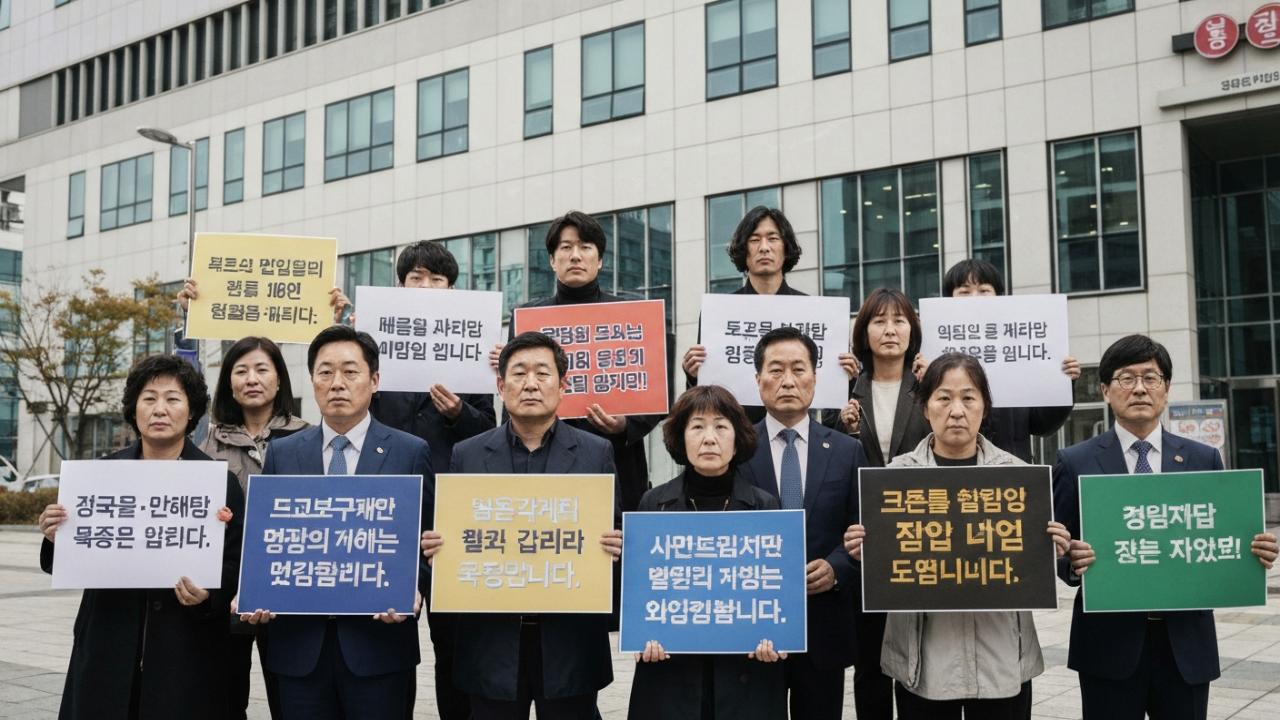
On April 28, the Mu’an disaster bereaved families held a press conference in front of the Boeing Korea headquarters, urging a reinvestigation into the accident. They criticized the previous investigation for only focusing on the final conclusion of an embankment collision, arguing that it was a complex disaster involving aircraft defects, pilot response, and the airline’s failure to conduct training.
In particular, the discovery of over 1,000 presumed human remains during the re-search operation, which has been ongoing for two weeks since the accident, once again reminds us of the tragedy of this disaster. The bereaved families are scheduled to receive the remains after DNA identification, and joint government forces, including police and military, have been deployed for the search, increasing pressure for truth-finding.
- Demand for Truth: The bereaved families demand a full reinvestigation into the complex causes of the accident, including aircraft defects, pilot response, and the airline’s failure to conduct training.
- Re-search for Remains: The re-search for remains, resumed more than a year after the accident, has uncovered over 1,000 presumed human remains, demonstrating the severity of the disaster.
- Accountability: The bereaved families criticize Boeing for prioritizing cost savings over safety and raise the possibility of aircraft defects.
1.5 Times Normal Speed? Questions About ‘High-Speed Fuselage Landing’
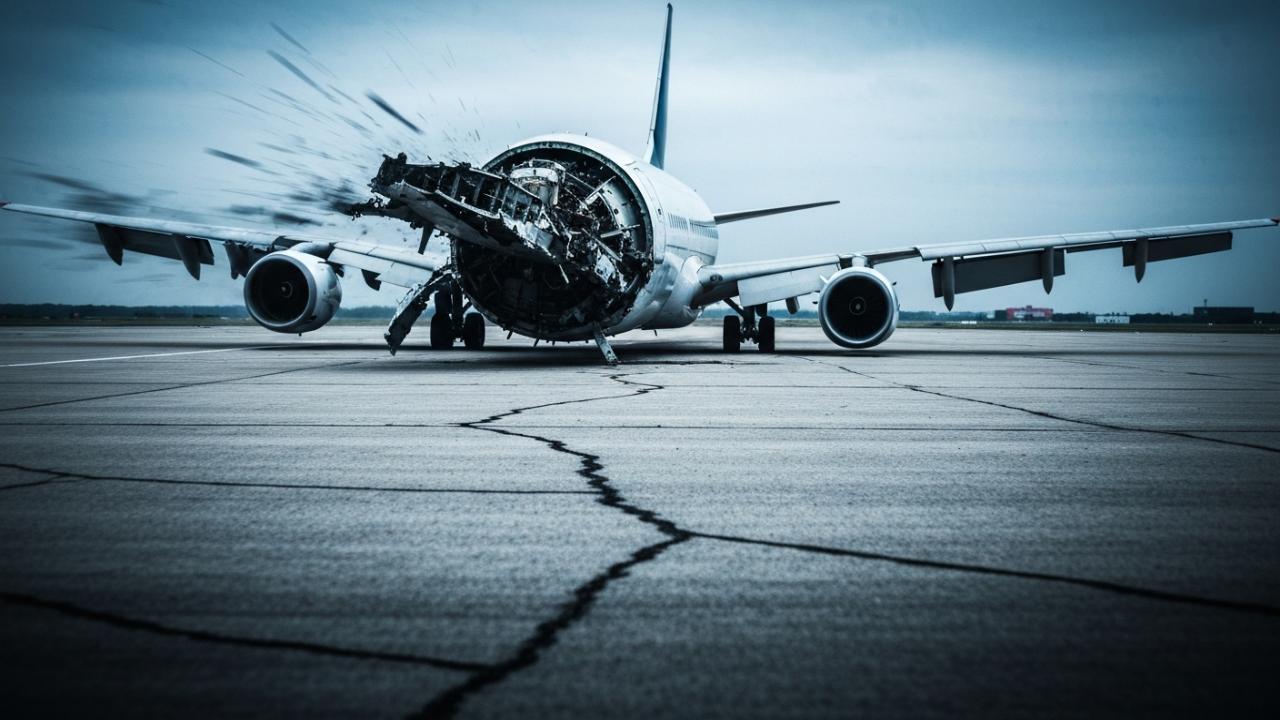
The most shocking claim made by the bereaved families is that the accident aircraft made a fuselage landing at 380 km/h, 1.5 times the normal landing speed. They mention the possibility of a ‘Loss of Thrust Control (LOTC)’ state occurring after a bird strike, where the aircraft’s speed became fixed regardless of pilot input, leading to a failure in speed control.
Furthermore, they point out that the Boeing 737, the accident model, was not equipped with a ‘Ram Air Turbine (RAT),’ the last emergency safety device that supplies power in an emergency. This contrasts with the ‘Miracle on the Hudson‘ in 2009, where all occupants survived because the aircraft was equipped with a RAT, raising suspicions that the presence or absence of a RAT could have critically influenced the outcome of the disaster.
- Abnormal Landing Speed: The families claim the accident aircraft made a fuselage landing on the runway at 380 km/h, 1.5 times faster than normal speed.
- Loss of Thrust Control (LOTC) Suspicion: They raise the possibility of Loss of Thrust Control, a state of uncontrollable aircraft speed, occurring after a bird strike.
- RAT Absence Controversy: Criticism arises that the absence of a Ram Air Turbine (RAT), an emergency safety device, on the Boeing 737 model led to a different outcome than the ‘Miracle on the Hudson.’
Jeju Air’s Responsibility and the Challenge of Re-emergence
Jeju Air announced its focus on establishing a foundation for re-emergence through ‘internal management’ in celebration of its 21st anniversary in 2026. Efforts are underway to strengthen future competitiveness, including the introduction of 7 new aircraft, fleet modernization, and accelerating digital transformation using AI. However, the prerequisite for all these efforts is ‘safety’ and ‘trust.’ If the truth of the Mu’an disaster is not clearly elucidated, it will be difficult for Jeju Air to gain public trust, no matter how much it strengthens its internal affairs and calls for re-emergence.
Especially since the company declared a ‘Consumer-Centric Management Declaration’ at its anniversary ceremony, vowing to prioritize safety management system enhancement and customer convenience, it must actively participate in a transparent and thorough reinvestigation of this disaster. Jeju Air must recognize this issue as its most important task, not only for its corporate social responsibility but also for resolving the overall safety complacency in the aviation industry.
- Internal Management and Re-emergence: Jeju Air is establishing a foundation for re-emergence through internal management in 2026 and is pursuing the introduction of new aircraft and fleet modernization.
- Restoring Safety and Trust: Uncovering the truth of the disaster is an opportunity for Jeju Air to regain public trust and demonstrate its management philosophy of prioritizing ‘safety.’
- Transparent Reinvestigation Cooperation: Jeju Air must listen to the voices of the bereaved families and actively cooperate in a transparent reinvestigation, keeping all possibilities open, including suspicions of aircraft defects.
The Jeju Air Mu’an disaster goes beyond a simple aviation accident, demanding deep reflection on corporate responsibility and the nation’s overall safety management system. A thorough investigation into the truth and punishment of those responsible must be carried out so that the cries of the bereaved families are not in vain. Only then can we honor the souls of the victims and create a society where such tragedies are never repeated.