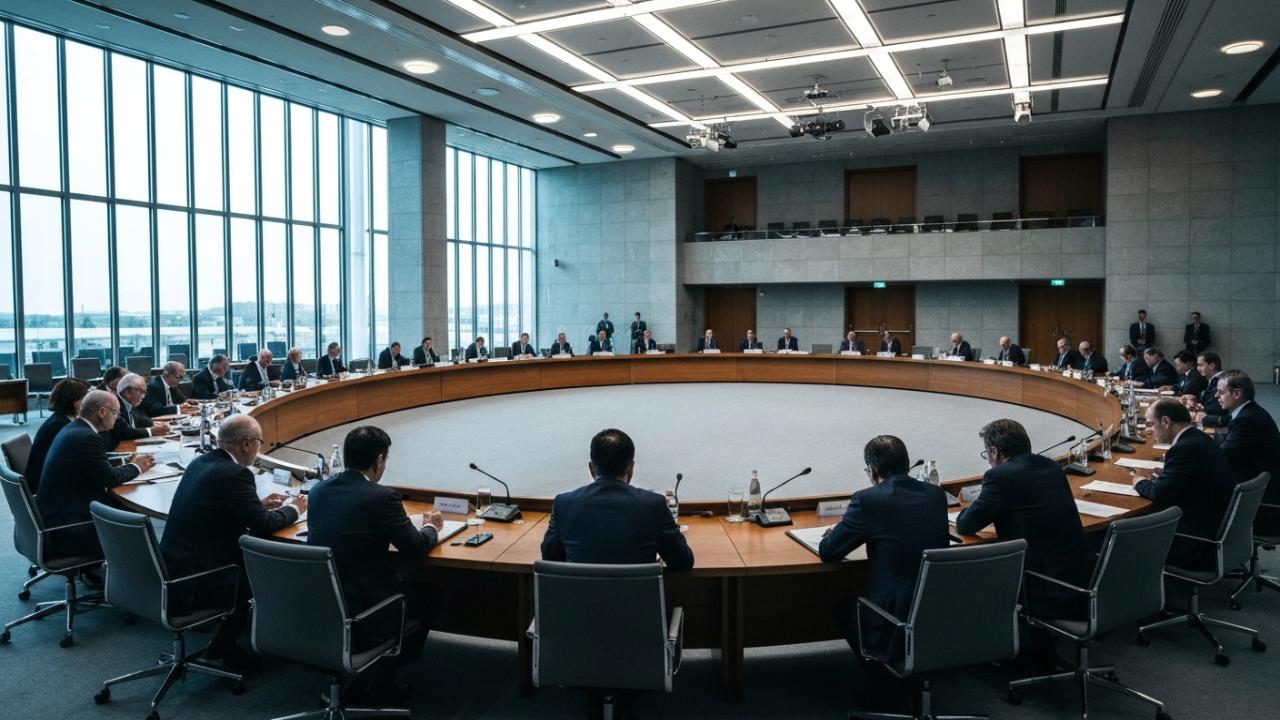
In April 2026, the North Atlantic Treaty Organization (NATO) appears to be grappling with internal and external challenges. Particularly shocking is the news that internal U.S. Department of Defense emails discussed the possibility of suspending Spain’s NATO membership due to its allies’ passive stance on the Iran war, shaking the very foundation of the alliance. While outwardly, preparations for the upcoming summit in Ankara, Turkey, are in full swing, internally, this is evidence of a serious conflict between the U.S. and some European allies over the Iran war. Will this situation merely end as an incident, or is it the beginning of a significant crack that will determine NATO’s future?
To be frank, such internal conflicts are not new. However, the mention of suspending a specific member state’s membership, as in this case, is unprecedented. It is fair to say that NATO is now facing its biggest test since its inception. Especially at the Ankara Summit scheduled for July, there is a crucial task to mend these internal conflicts and demonstrate the alliance’s unity. This is why all eyes are on Ankara.
U.S. ‘Suspension’ Email: The Real Reason Spain Is Upset

According to recent Reuters reports, internal U.S. Department of Defense emails mentioned potential measures against Spain due to a lack of allied support for the Iran war. This reportedly included the possibility of suspending Spain’s NATO membership. Spanish Prime Minister Pedro Sánchez dismissed these email reports, emphasizing that policy is based on official documents and positions, but the incident clearly reveals discord within the alliance. In fact, Spain has refused the U.S. military’s use of its bases and airspace for the Iran war, a firm stance based on Spain’s commitment to operating within the bounds of international law.
- U.S. Grievance: Lack of allied support for Access, Basing, and Overflight (ABO) rights related to the Iran war.
- Spain’s Position: Cooperation with the alliance within the framework of international law, but judging U.S.-Israeli actions related to the Iran war as violating international law.
- Limitations of the NATO Treaty: The NATO founding treaty does not contain explicit provisions for the suspension or expulsion of member states. Therefore, while the content of the email is unlikely to materialize, the controversy itself has fractured alliance relations.
2026 Ankara Summit: ‘Cohesion’ is the Biggest Challenge

The 36th NATO Summit is scheduled to take place in Ankara, Turkey, from July 7 to 8, 2026. This summit is an important occasion to elaborate on the increased defense spending (targeting 5% of GDP by 2035) and defense industry strengthening measures agreed upon at last year’s Hague Summit. Especially amidst complex international security situations such as the prolonged Russia-Ukraine war and instability in the Middle East, NATO’s unity is more crucial than ever. However, as with the aforementioned conflict with Spain, reconciling internal disagreements within the alliance is expected to be difficult. European security chiefs are even warning of a potential Russian invasion of NATO territory between 2027 and 2030, making a strong display of cohesion at this meeting a key challenge.
- Key Agenda:
- Achieving defense spending targets and strengthening defense industry capabilities
- Strengthening deterrence and defense posture against the Russian threat
- Fostering unity among allies and resolving internal conflicts
- Summit Venue: Beştepe Presidential Palace, Ankara, Turkey
- Expected Discussions: Seeking constructive solutions to issues concerning Greenland and the Strait of Hormuz.
Cyber Defense Exercise ‘Locked Shields 2026’, South Korea Participates

Beyond a military alliance, NATO continues active cooperation in the field of cybersecurity. A prime example is ‘Locked Shields 2026’, an international cyber attack defense exercise organized by the NATO Cooperative Cyber Defence Centre of Excellence (CCDCOE), held from April 20 to 24. South Korea’s AhnLab and the National Intelligence Service also participated as part of the Korea-Hungary joint team, demonstrating their response capabilities across the entire process, including detecting and blocking intrusion attacks, analyzing attack origins, and securing evidence in complex attack scenarios close to real-world environments. This strengthens the cyber crisis response capabilities among NATO member states and highlights the importance of international cooperation against evolving cyber threats.
- Exercise Objective: Strengthening cyber threat response capabilities of NATO member states and partner nations.
- South Korean Participation: AhnLab, National Intelligence Service, and other South Korean representatives participated in the technical training field as part of the Korea-Hungary joint team.
- Exercise Content: Scenario-based training similar to real-world situations, including detecting and blocking intrusion attacks, analyzing attack origins, identifying causes of breaches, and securing evidence.
This incident with Spain starkly illustrates the complex challenges facing NATO. It is a time when strengthening internal cohesion against external threats is more important than ever. It remains to be seen whether the Ankara Summit will serve as an opportunity to overcome these difficulties and explore new avenues for the alliance, or if the rifts of conflict will only deepen. Ultimately, NATO’s future depends on the wise choices of its member states.