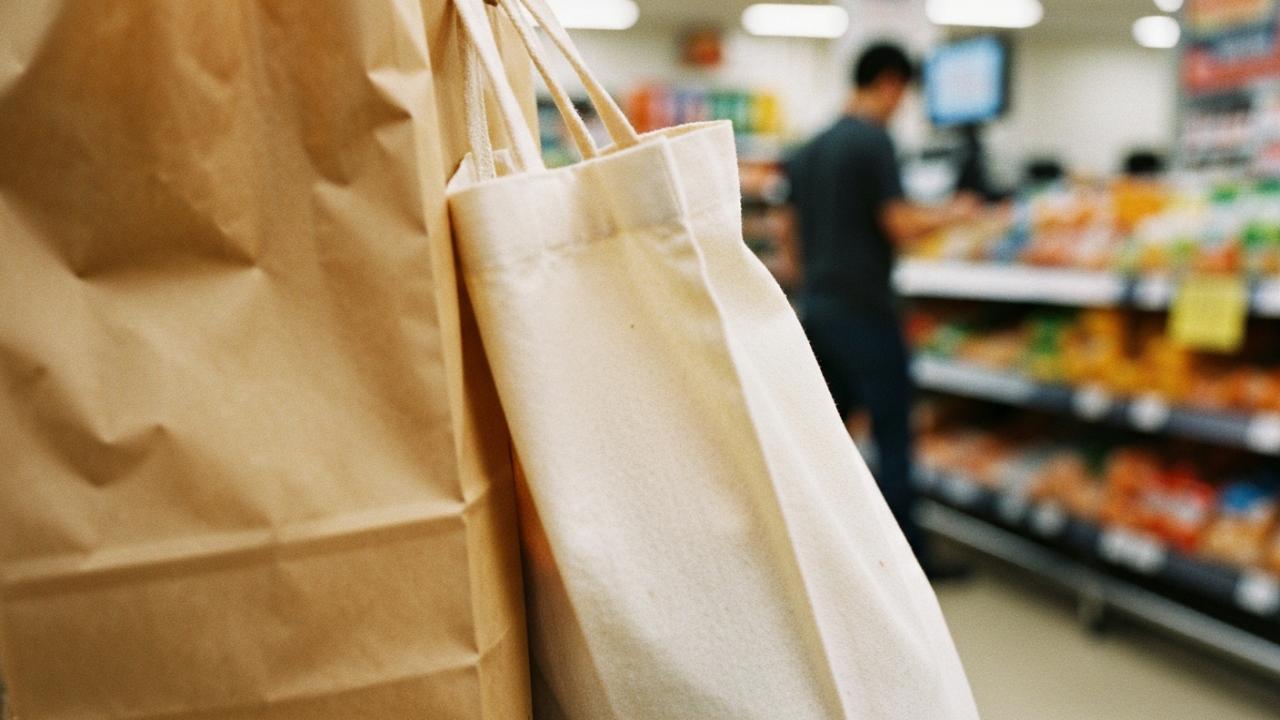
plastic bag ban Honestly, is there anything as common in our daily lives as plastic bags? Whether we’re making a quick trip to the grocery store or packaging something, plastic bags have always been in our hands. But now, this sight is becoming increasingly rare. Especially from 2026, regulations on plastic bag use will become stricter worldwide. Among these, California’s decision is truly groundbreaking, and we need to pay close attention. [cite: 2, 6, 7]
In fact, environmental protection is no longer an option but a necessity. The plastic waste problem, especially microplastic pollution, is truly serious, and everyone agrees that change is needed. That’s why 2026 will be a very important year for regulating disposable items, including plastic bags. What changes await us?
California Bans All Plastic Bags: Why This Choice?

Starting January 1, 2026, the U.S. state of California will completely ban the use of plastic bags in all retail stores. This isn’t just talk; it’s a strong measure confirmed by the governor’s direct signing of the bill (SB 1053). [cite: 2, 4, 5] While thin single-use bags were already banned, even thicker plastic bags, previously considered reusable, are now prohibited. Why? Because consumers were using and discarding them like single-use items, actually increasing plastic waste. [cite: 4, 25]
- Effective Date: January 1, 2026 [cite: 2, 5]
- Applicable To: All retail stores, including grocery stores and supermarkets [cite: 6, 25]
- Permitted Bags: Only reusable bags brought by customers or recyclable paper bags are allowed. [cite: 4, 6]
- Paper Bag Fee: A minimum fee of 10 cents will be charged for purchasing paper bags. [cite: 5]
- Exceptions: Thin plastic bags for packaging items like vegetables or meat, where contamination is a concern, can still be used. [cite: 4, 25]
Due to these changes, California residents will need to bring their own reusable bags or purchase paper bags when going to the store. [cite: 13, 15] While it may be inconvenient at first, many believe it’s the right direction for future generations. [cite: 15]
What About Korea? Key Changes in Domestic Environmental Regulations in 2026

So, what about Korea? Korea also plans to further strengthen regulations on disposable items and accelerate the transition to a circular economy starting in 2026. There are several notable changes to watch out for.
- Strengthened Restrictions on Disposable Cups/Straws: The use of plastic straws, stirrers, and paper cups will be mandatory in food service establishments like cafes and restaurants. [cite: 3, 9]
- Introduction of ‘Separate Cup Payment System’: When using disposable plastic cups, customers will pay a separate cup price (around 100-200 won), and discounts will be offered for using tumblers to encourage the use of reusable items. [cite: 3]
- Ban on Direct Landfilling of Metropolitan Area Household Waste: From 2026, direct landfilling of household waste in standard garbage bags without sorting or incineration will be completely prohibited in the Seoul metropolitan area. This will bring significant changes to waste disposal methods. [cite: 9, 19]
- Review of Mandatory Reusable Container Use: The government is reportedly considering making the use of reusable containers mandatory in places like sports stadiums and movie theaters. The drive to reduce disposable items is expanding across the board. [cite: 11]
Considering the confusion in the field, regulations that were postponed will be fully implemented from 2026, so both businesses and individuals need to prepare in advance. [cite: 9]
The Pros and Cons of Eco-Friendly Alternatives: The Reality of Biodegradable Plastic Bags

So, what about biodegradable plastic bags, often called eco-friendly alternatives? This is actually a complex issue. The government has decided to extend the validity period of eco-friendly certification for biodegradable plastics, which was set to expire this year, by four years until 2028, causing controversy. [cite: 18] The reason is simple: the current certification condition of ‘90% or more decomposition within 180 days in soil at a high temperature of 58 degrees Celsius’ is almost impossible in natural environments. [cite: 18]
- Realistic Decomposition Limits: There are many criticisms that biodegradable plastic bags do not decompose properly in natural conditions. [cite: 18]
- Difficulty in Separate Collection: Biodegradable resins, when mixed with general plastics, hinder recycling, and a separate collection system is still inadequate. Most end up being incinerated in standard garbage bags. [cite: 18]
- Greenwashing Controversy: Criticism continues that despite the ‘eco-friendly’ label, the actual environmental effect is negligible. [cite: 18]
Therefore, the government is also promoting a plan to expand the use of recycled materials in standard garbage bags due to concerns about disruptions in the supply of recycled materials caused by instability in the Middle East. [cite: 23] Ultimately, to create a proper circular economy, it seems we need to consider not just relying on the ‘biodegradable’ label, but also the actual decomposition environment and collection systems.
2026 seems to be a year of significant changes in the use of plastic bags and other disposable items. Some places, like California, are introducing strong regulations, and Korea is also accelerating its transition to eco-friendliness in various ways. Of course, it might feel inconvenient and unfamiliar at first, but don’t you think we all need to make a little effort to pass on a better environment to the next generation? I believe that small actions gather to create big changes.