
Thyroid cancer, which recently ranked first in cancer incidence in Korea, is often called ‘the good cancer.’ However, this nickname often leads many to overlook early symptoms or mistake them for simple fatigue or burnout. In fact, some celebrities have reportedly dismissed their lethargy as burnout only to be diagnosed with thyroid cancer later, further raising awareness. While thyroid cancer often presents no distinct symptoms in its early stages, it is crucial to recognize the subtle signals your body sends and detect it early.
The thyroid gland is a butterfly-shaped organ located 2-3 cm below the Adam’s apple at the front of the neck, secreting hormones essential for our body’s metabolism and energy production. If cancer develops here, it can lead to thyroid dysfunction and affect overall health. Today, we will delve into why thyroid cancer is often misunderstood as ‘the good cancer’ and explore its early symptoms that are easily mistaken for burnout.
Thyroid Cancer: Why It’s Called ‘The Good Cancer’ But Shouldn’t Be Underestimated
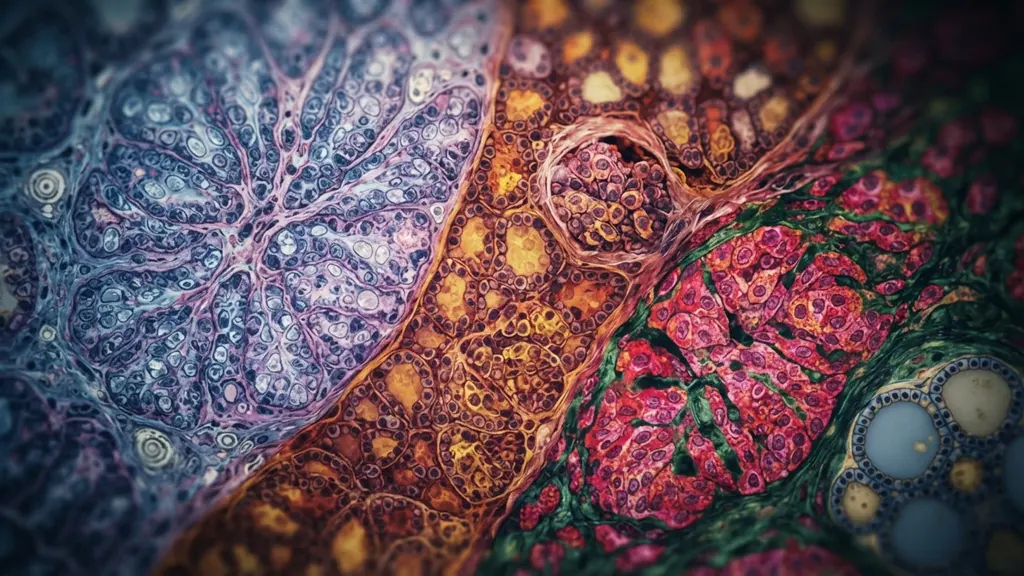
Thyroid cancer is often referred to as ‘the good cancer’ because it generally progresses slowly and has a favorable prognosis compared to other types of cancer. Papillary thyroid cancer, which accounts for 80-90% of all thyroid cancers, indeed has an excellent treatment prognosis and a high cure rate. However, this optimistic perception can lead to complacency, causing individuals to miss opportunities for early diagnosis. Not all thyroid cancers are ‘good.’ Thyroid cancer is classified into several types based on its histological characteristics, including papillary, follicular, medullary, and anaplastic carcinoma. Among these, medullary and anaplastic carcinomas progress rapidly and have a poor prognosis, requiring special attention.
According to the latest National Cancer Registry statistics, new cases of thyroid cancer in Korea accounted for 12.3% of all cancers in 2023, ranking first in incidence. Notably, the proportion of female patients is about three times higher than male patients, and there is a clear increase in incidence among young people in their 20s and 30s. Despite such high incidence, the misconception of it being ‘the good cancer’ can lead to overlooking the physical and psychological distress patients experience before and after treatment. Thyroid cancer is a disease that requires careful, lifelong management.
| Type of Thyroid Cancer | Characteristics | Prognosis |
|---|---|---|
| Papillary Carcinoma | Most common form (80-90%), slow progression | Very good, high cure rate |
| Follicular Carcinoma | Second most common, tendency for blood metastasis | Relatively good |
| Medullary Carcinoma | Rare but strong genetic factors | Worse than papillary and follicular carcinoma |
| Anaplastic Carcinoma | Rarest but very aggressive, rapid progression | Very poor |
Thought It Was Burnout? 7 Early Symptoms of Thyroid Cancer

In most cases, thyroid cancer does not present with specific symptoms in its early stages. However, as the cancer gradually grows, it can compress surrounding tissues or impair function, sending various signals. These symptoms are easily mistaken for everyday fatigue or other illnesses, so they should be carefully observed.
- A palpable lump (nodule) in the neck: This is the most common early symptom. A lump or nodule may be felt in the thyroid area at the front of the neck, often without pain. If it is hard, fixed to surrounding tissues, or suddenly grows in size, medical consultation is essential.
- Voice changes: This includes hoarseness or alteration of the voice. It can occur when thyroid cancer invades or compresses the vocal cord nerves.
- Difficulty swallowing (dysphagia): You may experience discomfort or a foreign body sensation when swallowing food. This symptom appears when an enlarged tumor compresses the esophagus.
- Shortness of breath: If a large tumor compresses the trachea, you may experience difficulty breathing.
- Persistent cough: A chronic cough that cannot be explained by other reasons may appear.
- Neck pain: Pain may occur around the thyroid gland or extend to the ear.
- Fatigue and weight changes: Extreme fatigue or lethargy that doesn’t improve with rest, or unexplained weight loss or gain, may occur. This can be related to thyroid hormone imbalance and is easily mistaken for burnout.
While not all these symptoms necessarily indicate thyroid cancer, if they persist or you have concerns, it is crucial to consult a medical professional for an accurate diagnosis. Regularly checking your neck for lumps or swelling through self-examination can also be helpful.
If a Lump is Felt? Thyroid Cancer Diagnosis Process and Examination Methods

If a lump is felt in your neck or if you suspect any of the symptoms mentioned above, it is important to visit a hospital immediately for a thorough examination. This is because thyroid cancer has a high cure rate when detected early. Thyroid cancer diagnosis primarily involves imaging tests and tissue biopsy.
The main diagnostic methods are as follows:
- Physical examination (palpation): A doctor manually examines the neck area to check for the presence, size, and hardness of any lumps. Large or superficial lumps can often be detected by palpation.
- Thyroid ultrasound: This is the most commonly used imaging test for thyroid cancer diagnosis. Ultrasound allows for precise confirmation of the presence, size, shape, location, and invasion of surrounding organs by thyroid lumps (nodules). It is essential for identifying characteristics of suspicious nodules.
- Fine-needle aspiration (FNA) cytology: This is the most crucial test for confirming thyroid cancer. Under ultrasound guidance, a thin needle is inserted into the thyroid nodule to collect cells, which are then examined by a pathologist for the presence of cancer cells. The pain is comparable to a regular injection, and the procedure takes approximately 10 minutes or less.
- Core needle biopsy: This may be performed for a more accurate diagnosis if FNA results are inconclusive, difficult to interpret, or if atypical cells are found. It involves collecting tissue with a needle larger in diameter than that used for FNA.
- Blood tests: Used to evaluate thyroid function (TSH, thyroid hormones, etc.) and to check for specific markers of thyroid cancer (e.g., calcitonin is a marker for medullary carcinoma). Blood levels are used more for a supportive role or post-treatment follow-up rather than solely for cancer diagnosis.
- Imaging tests such as CT, PET/CT, MRI: These are performed as needed to assess the extent of cancer progression, presence of lymph node metastasis, and distant metastasis to other organs.
The diagnostic process is determined by comprehensively evaluating the patient’s symptoms, nodule size, ultrasound findings, and cytology results. Not all thyroid nodules are cancerous, so an accurate diagnosis from a specialist is crucial.
Thyroid Cancer Management After Diagnosis: Preventing Recurrence and Maintaining Health

While thyroid cancer generally has a better prognosis and higher cure rate than other cancers, consistent management after diagnosis is essential. Even if the cancer is completely removed, there is a possibility of recurrence or metastasis to other organs. Particularly when it metastasizes to the lungs or bones, the prognosis is poor, making continuous follow-up crucial.
Key management methods after thyroid cancer diagnosis are as follows:
- Taking thyroid hormone medication after surgery: Patients who undergo thyroidectomy will have insufficient thyroid hormones and must take thyroid hormone medication for life. This helps maintain normal metabolic function and simultaneously suppresses the recurrence of thyroid cancer.
- Regular follow-up examinations: Even after surgery, regular blood tests (thyroglobulin, TSH, etc.) and neck ultrasounds are performed to check for recurrence. The frequency of follow-up examinations is determined by the medical team based on the cancer’s risk level and progression.
- Radioactive iodine therapy: This is not necessary for all patients and is selectively performed considering the cancer’s size, metastasis status, and risk of recurrence. It is used to destroy remaining thyroid cells or metastatic cancer cells.
- Maintaining healthy lifestyle habits: Overall health management, including a balanced diet, regular exercise, sufficient sleep, and stress management, plays an important role in preventing recurrence and improving quality of life.
Thyroid cancer requires continuous attention and management even after diagnosis. Strictly following the treatment plan in close cooperation with your medical team and not missing regular check-ups are key to maintaining a healthy life.
Thyroid cancer has a complex reality hidden behind its ‘good cancer’ moniker. Its early symptoms are often vague and easily mistaken for burnout or simple fatigue, but with early detection and appropriate treatment, a high cure rate can be expected. If you feel a lump in your neck, experience voice changes, or difficulty swallowing, do not hesitate to consult a specialist for an accurate diagnosis. Regular health check-ups and listening to the subtle signals your body sends are the wisest ways to protect your health from thyroid cancer.