
It has now become common knowledge that the Korean Peninsula is no longer an earthquake-safe zone. Earthquakes, one of the unpredictable natural disasters, can threaten our lives anytime, anywhere. Especially in the event of a large-scale earthquake, initial response is a crucial key to survival. As of 2026, we must not lower our guard against earthquakes and familiarize ourselves with the correct earthquake evacuation tips. Rather than trembling with vague anxiety, it is most important to protect yourself and your family’s safety based on accurate information. This article details specific action guidelines according to the latest 2026 guidelines, from immediately after an earthquake occurs to evacuation and survival bag preparation.
Immediately After an Earthquake, Securing a ‘Survival Space’ is Key

The moment the ground shakes due to an earthquake, the first thing to do is to secure a ‘survival space’. The major shaking of an earthquake is usually short, lasting about 1-2 minutes, but avoiding injuries from falling objects or building damage during this short time is directly linked to survival. At this time, you must remember the ‘Drop, Cover, and Hold On’ action guidelines.
- Get under a sturdy table: If you are indoors, such as at home, in the office, or at school, this is the first thing you should do. Get under a sturdy table or desk, crouch down, and hold onto the table legs tightly until the shaking stops. If there is no table, protect your head with a cushion or pillow and crouch in a relatively safe space such as a wall corner or next to a pillar.
- Stay away from windows and falling objects: Areas near windows or around tall furniture are the most dangerous during an earthquake. You can be seriously injured by broken glass fragments or falling objects, so move away immediately.
- Calmly assess your surroundings: It is important to remain calm and observe your surroundings. Especially in the kitchen, immediately stop using appliances with fire hazards, such as gas stoves.
Thus, a calm response during the initial 1-2 minutes of an earthquake plays a decisive role in saving lives. Finding a space to protect your body and safely evacuating from falling objects is the first and most important action.
Once the Shaking Stops, Evacuate Quickly! Secure the ‘Golden Time’
Just because the major shaking of an earthquake has stopped does not mean all danger has passed. On the contrary, this is when the ‘golden time’ begins to prevent secondary damage such as fires or building collapses and to evacuate to a safe place.
- Shut off gas and electricity, secure exits: Once the shaking stops, turn off gas valves and electrical switches to prevent fires. It is also important to open doors or windows to secure emergency exits in advance, as doors may warp and not open if the building tilts due to an earthquake.
- Wear shoes and use stairs: When leaving the house, you must wear shoes. This is because your feet can be injured by broken glass fragments or building debris. Never use elevators, as they can malfunction during an earthquake; always use the stairs to evacuate.
- Move to a safe evacuation area: Once outside the building, be careful of falling objects such as signboards, windows, and fences, and move as far away from the building as possible. It is important to quickly evacuate to a wide open outdoor space, such as a playground or park, which serves as an earthquake outdoor shelter. It is safer to walk than to use a vehicle while moving.
- Verify accurate information: At the evacuation site, do not be swayed by unfounded rumors or misinformation; act according to correct information such as radio broadcasts or public institution announcements.
During this process, it is necessary to remain calm and cooperate with those around you. Especially when with children or the elderly, even more careful attention is required.
Preparing a ‘Survival Bag’ and Essential Supplies List in Advance

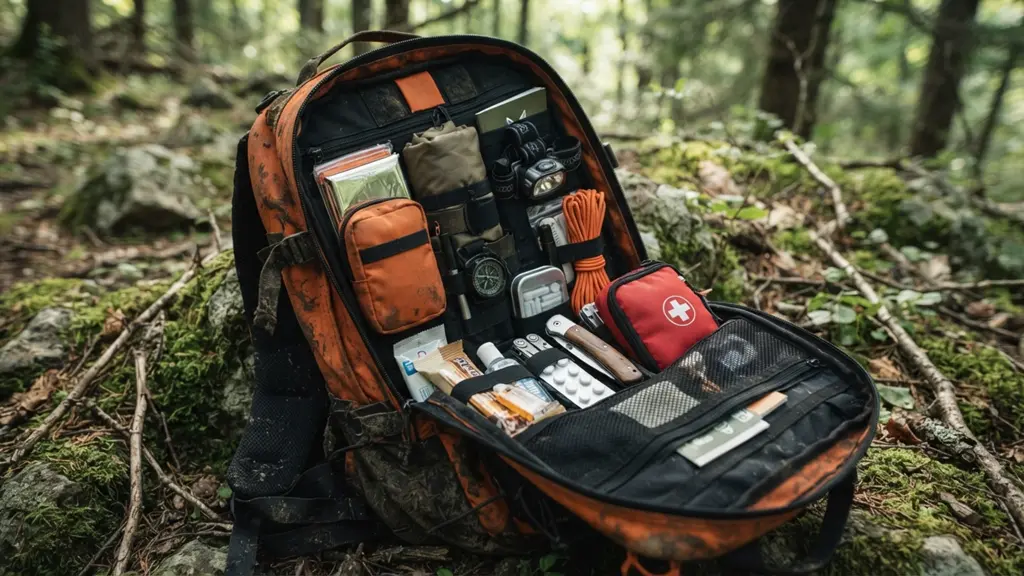
After an earthquake, infrastructure such as electricity, water, and gas may be paralyzed. It is wise to prepare emergency supplies in advance to survive on your own for at least 3 days. Packing a so-called ‘survival bag’ or ’emergency evacuation bag’ can be of great help in an emergency. It is important to regularly check the survival bag according to the number of family members and replace its contents.
| Category | Essential Items | Details |
|---|---|---|
| Food and Water | Emergency food, drinking water | Canned goods, hardtack, chocolate, etc. that can be consumed without heating (at least 3 days’ worth), more than 3 gallons of drinking water per person per day |
| First Aid Supplies | First aid kit | Disinfectant, bandages, fever reducers/painkillers, personal regular medication, masks, etc. |
| Warmth and Hygiene | Blanket, clothing, hygiene products | Blanket or sleeping bag for body temperature maintenance, spare clothes, wet wipes, portable soap, towels, etc. |
| Lighting and Communication | Flashlight, radio, power bank | Includes spare batteries, radio for receiving disaster broadcasts, power bank for charging mobile phones |
| Personal Important Items | ID, cash, emergency contact list | Copy of ID, small amount of cash, emergency contact information for family and relatives (paper record) |
| Other | Whistle, knife, fire extinguisher | Whistle for calling for rescue, multi-purpose knife, fire extinguisher (for vehicle or home) |
The survival bag should be stored in an easily accessible place, such as near the front door or by the bedside, and all family members should know its location.
Location-Specific Earthquake Evacuation Strategies: Home, School, Office

Earthquakes can occur anywhere, anytime, so it is important to be familiar with evacuation tips depending on your current location. Customized responses that consider the characteristics of each location can minimize damage.
- When at home: Get under a sturdy table free of falling objects like furniture and televisions to protect your body. Once the shaking stops, shut off gas and electricity, open doors to secure exits, put on shoes, and evacuate using the stairs.
- When at school or in the office: Offices with many heavy objects like computer mainframes and monitors have a particularly high risk of falling objects. Get under a desk, crouch down, and hold onto the desk legs to protect your body. Prepare to move to a safe evacuation area such as a school playground or a large park.
- When using public transportation: On subways or buses, hold onto handrails or pillars to avoid falling. If the subway stops, evacuate calmly according to the announcements, and if driving, pull the car over to the right side of the road and evacuate.
- When in the mountains or by the sea: Be careful of landslides or cliff collapses, and evacuate to flat ground, avoiding steep slopes. On the coast, if a tsunami warning is issued, you must immediately move to higher ground.
It is important to identify potential hazards in each location in advance and familiarize yourself with the appropriate action guidelines. Regularly conducting earthquake preparedness drills with family or colleagues is also a good method.
After an Earthquake, Safety Verification and Phased Recovery Actions
Even after the direct shaking of an earthquake has stopped and evacuation is complete, the situation is not over. Various risks, such as the possibility of aftershocks, facility damage, and information chaos, still lurk after an earthquake. Therefore, it is important to calmly follow the next phased actions even after an earthquake.
- Verify family safety and rescue injured: After evacuating, check for injuries among family members present, and if there are injured people nearby, cooperate with neighbors to provide first aid and report to rescue agencies such as 119.
- Assess damage and decide whether to return home: Verify accurate information through radio or public institution announcements, and carefully decide whether to return home based on the surrounding damage situation. If returning to a house or office, be careful when opening doors as contents of wardrobes or storage units may spill out.
- Facility safety inspection: After returning home, check for hazards such as gas leaks, damaged electrical wiring, and ruptured pipes. Do not enter buildings whose safety is questionable until they have been inspected by an expert.
- Prepare for aftershocks and receive information: Aftershocks can occur over several days or weeks, so continue to check reliable emergency information via radio or TV and pay attention to public emergency alerts. Repeat the ‘Drop, Cover, and Hold On’ action guidelines whenever shaking is felt.
- Report earthquake damage: If you have suffered property damage due to an earthquake, you can report the damage through the National Disaster Safety Portal, etc.
It is important to respond calmly even in the chaotic situation after an earthquake, and especially not to be swayed by rumors but to act according to information from credible institutions.
Earthquakes are unpredictable, but their damage can be significantly reduced. The earthquake evacuation tips and preparedness we have learned today are not just simple information, but the most powerful shield to protect my life and my family’s. It is important to prepare in advance and repeatedly familiarize yourself with them to develop a safety consciousness that allows you to respond calmly in any situation. It is necessary to always be prepared with a ‘what if’ mindset rather than a ‘no way’ mindset.