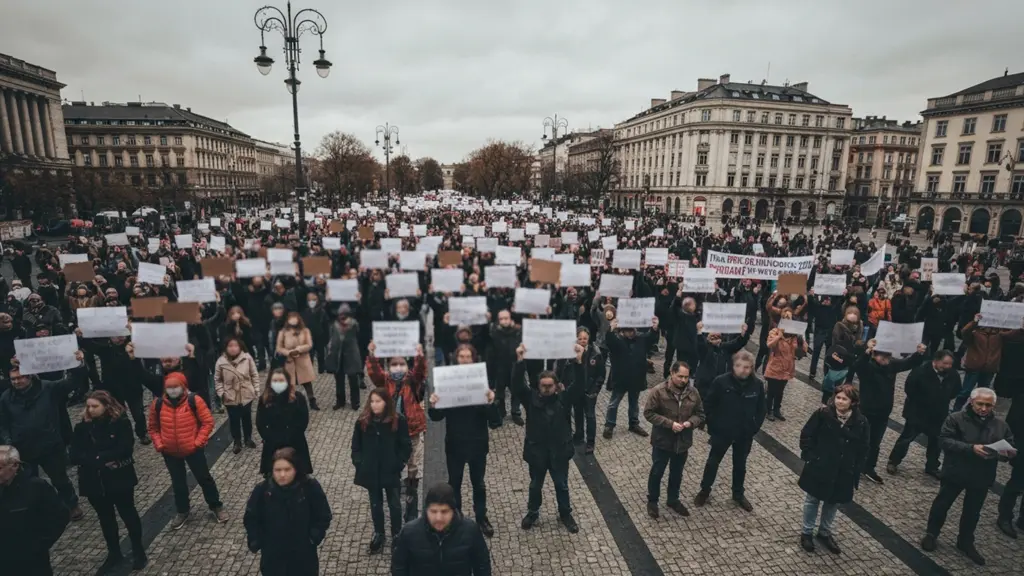
They are indispensable in schools, yet they still suffer from discrimination and inequality. These are the non-regular school workers. The National School Non-Regular Workers’ Union (hereinafter referred to as the School Workers’ Union), which works to improve their rights and interests, recently raised its voice by holding a large-scale general rally. Although the government’s ‘Measures to Improve Treatment for Non-Regular Workers in the Public Sector’ were announced, it is pointed out that concrete changes in schools are still minimal.
On July 4th, the School Workers’ Union held a national general rally with 10,000 participants in downtown Seoul, strongly urging the elimination of discrimination against non-regular school workers and the improvement of their treatment. They asserted that schools are workplaces rampant with low wages, employment insecurity, and fragmented ultra-short-term contracts, demanding practical follow-up measures and budget allocation for the government’s plan announced last April.
The Reality of Non-Regular School Workers

Non-regular school workers play key roles in educational welfare, including school meals, childcare, special education, administration, cleaning, and night duty. Despite being responsible for many aspects of school operations, their working conditions remain poor. Chronic issues include a wage system that is only half that of regular workers, even after decades of service, unpaid leave during vacations, and discrimination in welfare benefits.
In particular, the workload for cafeteria cooking staff is extremely high. It is common for one cooking staff member to be assigned per 150-200 students, which means an extreme work environment where they must handle cooking for hundreds of people, cleaning, and tidying up. Poor ventilation in kitchens during summer can lead to dehydration or musculoskeletal disorders, and there have even been cases of occupational lung cancer.
5 Key Demands of the General Rally

The School Workers’ Union presented the following key demands to the government and education authorities to end discrimination in schools and secure their rightful rights:
- Significant Increase in Long-Service Allowance: Demanding an increase in long-service allowance so that those who work longer receive more compensation.
- Increased Staffing in School Kitchens: Urgent need to secure sufficient personnel to improve the poor working environment and safety in school kitchens.
- Resolution of Unpaid Vacation Issues: Urging the establishment of measures to ensure stable livelihoods during vacations without financial worries.
- Conversion of Part-Time/Fixed-Term Workers to Full-Time/Permanent Positions: Employment insecurity must be resolved, and a stable working environment must be provided.
- Reform of the Wage System: Demanding a reform of the wage system to reduce the wage gap with regular workers and recognize fair job value.
Urging the Government and Education Authorities to Fulfill Their Promises
The School Workers’ Union points out that despite the government’s announcement of ‘Measures to Improve Treatment for Non-Regular Workers in the Public Sector,’ there is a lack of concrete follow-up measures or budget allocations to support it. In particular, the Ministry of Education promised to promote a pan-governmental task force for comprehensive school meal measures, but criticism suggests that substantive discussions are lagging, and the task force is only operating around ventilation facilities.
The union emphasizes budget allocation for resolving the wage gap for education public service workers and ensuring stable livelihoods for non-working staff during vacations, repeatedly urging the Ministry of Education to play a leading role as a model employer. They insist that the 2027 government budget proposal must include budgets for livelihood support for non-working staff during vacations and for increasing cooking staff in school kitchens.
It is time for the government and education authorities to take a responsible stance to ensure that non-regular workers in schools receive the fair treatment they deserve and can work in better environments. It is time to listen to their voices and bring about real change.