dental implant cost As we age, dental health critically impacts our quality of life. Since lost teeth don’t grow back, many consider dental implants, but often hesitate due to the significant implant cost. Especially in 2026, curiosity about health insurance coverage standards and policy changes is growing. How is the government managing implant-related policies, and what benefits should we not miss out on?
Dental Implants for Ages 65+: The Secret Behind the 30% Patient Co-payment

Currently, in South Korea, seniors aged 65 and over can receive health insurance benefits for up to two dental implants in their lifetime. This means the National Health Insurance Service covers 70% of the total treatment cost, and the patient pays the remaining 30% as a co-payment. Thanks to this, implant procedures are now possible at a cost of approximately 350,000 to 400,000 KRW per implant. In the past, many chose dentures over implants due to cost burden, but with expanded insurance benefits, access to implants has significantly increased.
Notably, the scope of insurance coverage for prosthetic materials has also expanded.
- Previously covered material: PFM (Porcelain Fused to Metal)
- Expanded coverage from 2025: Zirconia
Zirconia boasts aesthetic qualities similar to natural teeth and excellent strength, making it particularly suitable for front tooth implants. This allows patients to choose treatments that consider both function and aesthetics without significant financial burden. Seniors aged 65 and over can also receive health insurance coverage for dentures once every seven years, with the same 30% co-payment as implants.
Implant Costs: Why Do They Vary So Much Between Clinics?
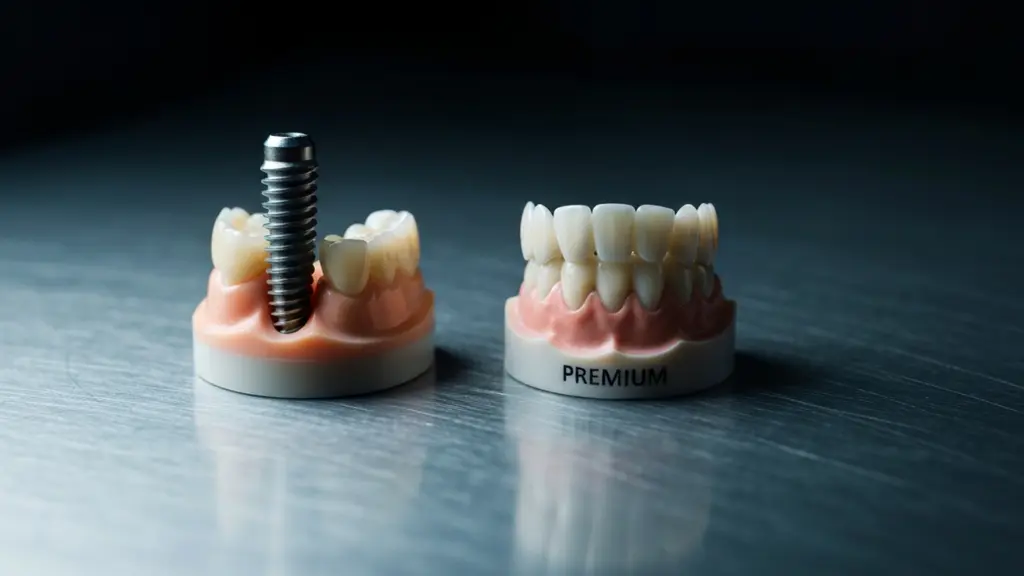
You might wonder why the cost of the same implant procedure varies greatly between dental clinics. In 2026, the factors determining implant prices are not just about brand. Deciding solely based on cheap implant advertisements could lead to unexpected additional costs or unsatisfactory results.
Key factors causing cost differences include:
- Implant Brand:
- Domestic: Osstem, Megagen, Dentium, etc. (World’s No. 1 market share)
- Premium Imported: Straumann, etc. (Relatively higher cost)
Some low-cost implant advertisements may use unverified brands, so caution is advised.
- Prosthetic Material:
- Insurance Covered: PFM, Zirconia
- Not Insurance Covered: Gold, All-ceramic, etc. (Prices vary based on aesthetics and strength)
- Need for Additional Procedures:
- Bone Grafting: Essential if there is insufficient jawbone
- Sinus Lift: May be necessary for upper molar procedures
- Re-surgery: Cost incurred for re-implantation if initial implant fails (50% patient co-payment)
Advertisements often exclude these additional costs, so always confirm the total cost.
- Surgical Environment and Medical Team’s Expertise:
- Presence of an independent, sterile operating room
- Adoption of digital navigation implant systems
- Experience and expertise of the medical team (customized treatment for each case)
Ultimately, what’s important is not just asking, “How much is it?” but rather, “What is included in this price?” Choosing a clinic that transparently explains the total cost and treatment details is the attitude of a wise consumer.
Expanding Coverage to Age 60? The Real Issue of 2026 Implant Policy

The hottest topic regarding 2026 implant policy is the ‘expansion of health insurance coverage age.’ The government and political circles are seriously considering lowering the age for implant health insurance benefits, currently applied to those aged 65 and over, to 60. However, there has been no legally confirmed announcement regarding the exact date in 2026 when this will be implemented. National policies require budget allocation and parliamentary procedures, so it inevitably takes time.
In this situation, neglecting painful teeth while simply waiting for the expansion of 60-year-old coverage is not wise. Once jawbone is lost, it is difficult to recover, and missing the treatment window can lead to more complex and expensive procedures. Instead, consulting with a specialist for immediate necessary treatment to seize the golden time is, in the long run, a way to save on implant costs. It’s also important to remember that it’s highly likely there will be no disadvantage for those who have already received treatment even if the policy expands. Safe and accurate treatment methods, such as navigation implants using digital technology, are already established, so rather than just chasing price, it’s crucial to choose safe and reliable treatment.
Implants are more than just placing a single tooth; they are an important process for regaining a healthy life. We hope you understand the 2026 implant health insurance policy correctly and make wise choices tailored to your needs to enjoy better oral health and quality of life.