
No, these days, whenever the stock market is mentioned, everyone’s eyes light up, don’t they? Especially looking at the KOSPI trend in 2026, I can’t help but feel that something big is happening. The Korean stock market, which performed well compared to global markets last year, is truly writing a ‘reversal drama’ this year. When I heard the news that KOSPI, which was at 2500 in April last year, had already broken through 5000 in January this year, I wasn’t the only one who thought, ‘Wow, that’s crazy!’, was I? It doubled in just 9 months – that’s truly amazing.
In fact, such a major bull market doesn’t just happen. Stock prices don’t rise simply because the atmosphere is good. Behind this KOSPI rally are important reasons we shouldn’t miss. Instead of just getting excited by the numbers, we need to understand why this trend is appearing. Only then can we also go down the path of ‘successful investing’, right?
The Power of the ‘EPS Rally’: Index Driven by Corporate Earnings

Honestly, I don’t think this KOSPI surge is merely a speculative rally. The key is corporate earnings. Securities firms are successively raising their 2026 KOSPI targets, and the background for this is ‘record-high upward revisions in earnings forecasts’. In the past, stock prices often rose first, leading to increased valuation burdens, didn’t they? But this time is different. Analysis suggests that the 12-month forward EPS (Earnings Per Share) forecast is rising along with stock prices, resetting the index’s upper limit itself.
This means it’s closer to an ‘EPS-driven rally’ rather than a ‘PER-overstretched rally’. The contribution of the semiconductor industry’s earnings is particularly significant. With earnings expectations for semiconductor leaders like Samsung Electronics and SK Hynix at record levels, it’s fair to say that their profits are pulling KOSPI up by the scruff of its neck. Korea Investment & Securities presented a 2026 KOSPI target of 5650, and DB Financial Investment even projected it could open up to 7044 points. Isn’t this absolutely crazy?
Semiconductors and AI: New Growth Engines for the Korean Economy

The Korean economy is expected to grow by 1.8-1.9% overall in 2026. This is a clear improvement from 2025, but what’s noteworthy here is the change in the growth method. In the past, exports led the way, but now, domestic demand recovery, including private consumption and construction investment, is expected to be the central axis of growth. However, that doesn’t mean exports are losing their power. In particular, semiconductor and AI-centric investments continue, changing the direction of growth for the Korean economy.
With the global AI cycle not yet over, combined with worldwide liquidity expansion and government policies to boost the stock market, there are even predictions that the Korean stock market could perform better than the US. The high valuation burden in the US also increases the likelihood of capital flowing into the Korean market, so ‘retail’ investors should also pay close attention to these trends. The top sectors commonly cited by major securities firms are semiconductors, AI infrastructure, and power equipment.
The Power of Retail Investors and Market Volatility
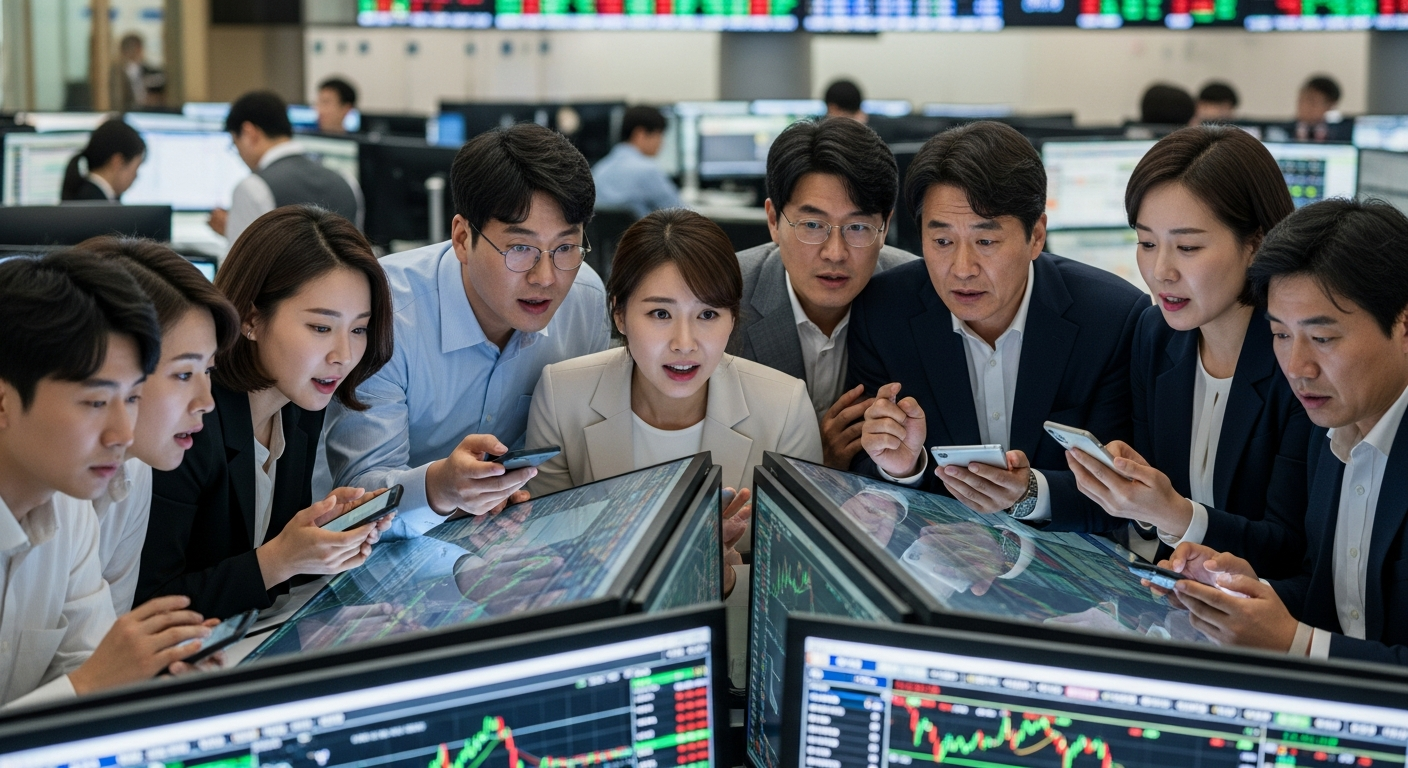
Another characteristic of the Korean stock market is the high proportion and significant influence of individual investors. The surge of Samsung Electronics stock to 90,000 won in 2021, and EcoPro’s rise to 1.5 million won last year, were ultimately thanks to massive buying by individual investors. A public opinion poll also showed that nearly half of the population expects the Korean stock index to rise in 2026, so the expectations of retail investors are clearly an important factor driving the market.
Of course, the market cannot be without volatility. External factors such as interest rate cuts, exchange rate fluctuations, and geopolitical risks always affect stock prices. It’s also important to remember that the Korean stock market tends to react particularly sensitively to dollar movements. In such a situation, rather than being swept away blindly, it seems like now is the time for prudent judgment, investing based on corporate fundamentals and the long-term growth potential of industries.
KOSPI200, A Key Market Indicator
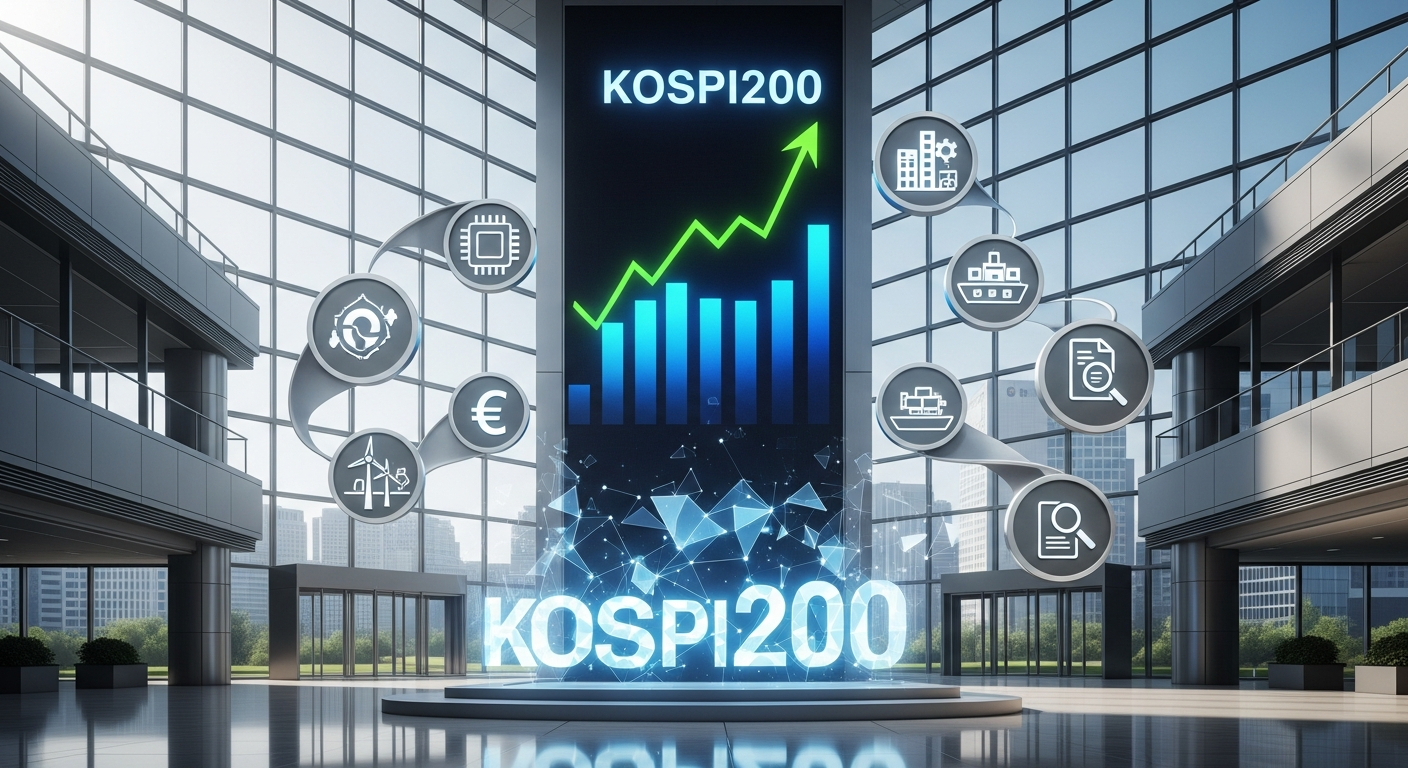
Just as important as the KOSPI index is the KOSPI200 index. This is a representative index of the Korean stock market and is used as a trading target index in the derivatives market. It gathers the top 200 companies by industry in the Korean stock market, so its reliability is very high. The KOSPI200 constituent stocks are changed annually on the day after the second Friday of June, and are selected by comprehensively considering market representativeness, liquidity, and marketability.
When selecting constituent stocks, newly listed stocks less than one year old and administrative issues are excluded, and the market capitalization proportion by industry group is also considered, so not just any company gets in. Ultimately, being included in the KOSPI200 means being recognized by the market, so it’s good to refer to it when investing.
The 2026 KOSPI market looks like it will be a very interesting year. Expectations are high, especially given that it’s a bull market supported by corporate earnings. Of course, the market always holds unpredictable variables, but by understanding these major trends and responding wisely, couldn’t we seize good opportunities?